
Last updated November 15, 2026
 Wrought iron
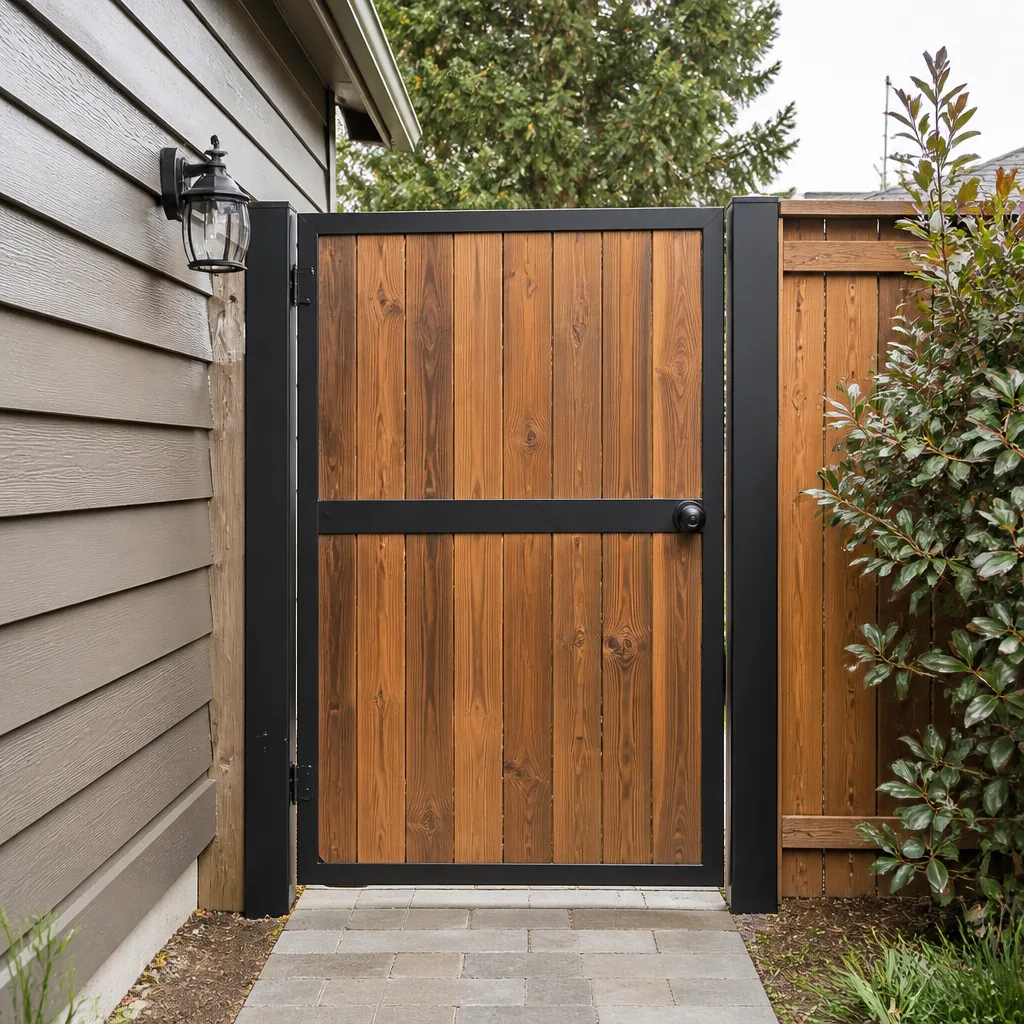 Wood & steel frame
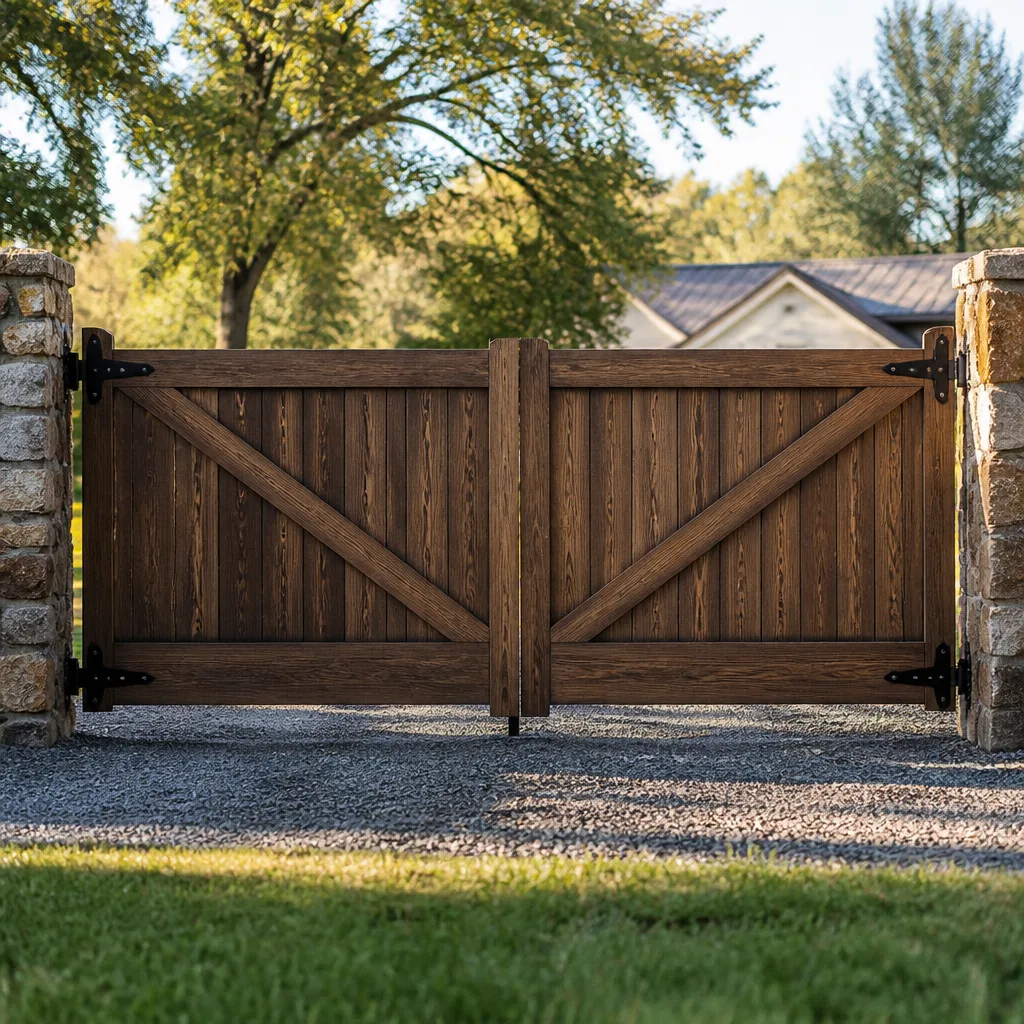 Farm & ranch
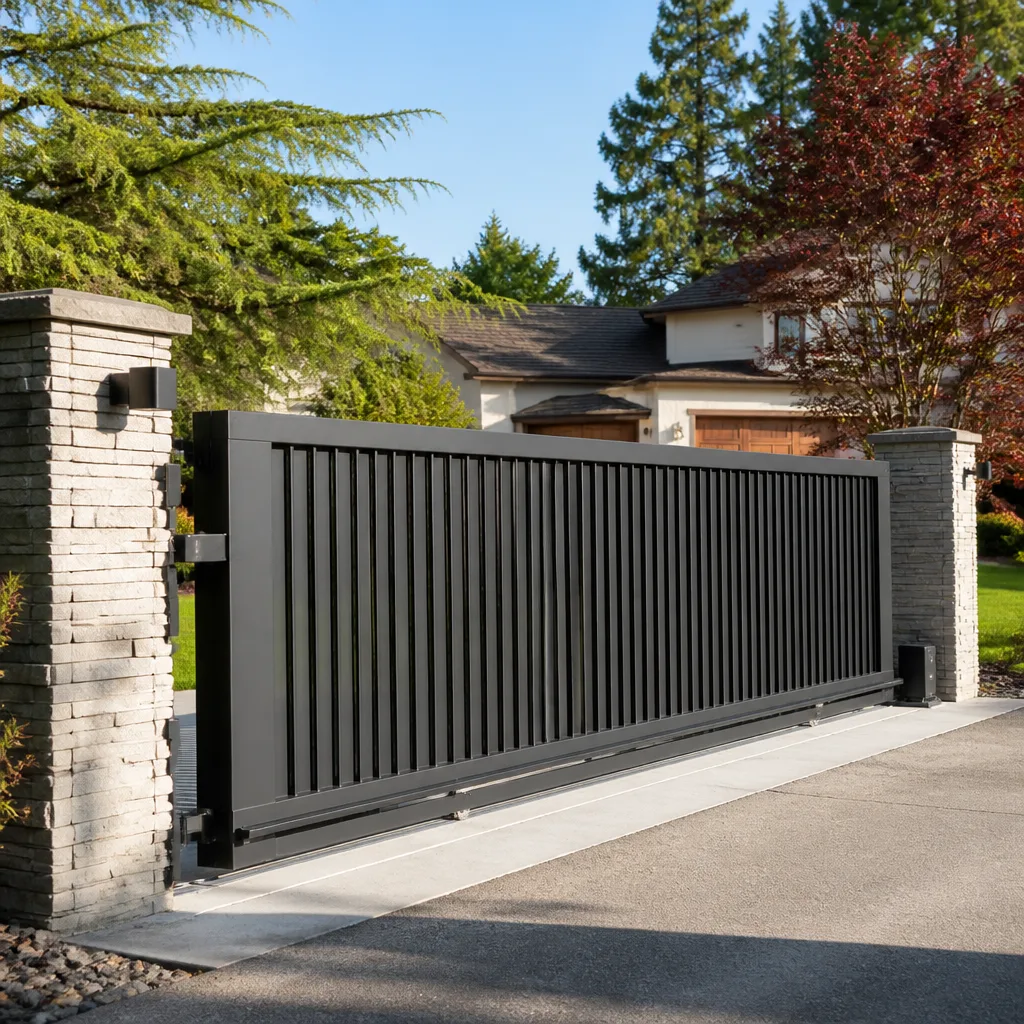 Sliding driveway gates
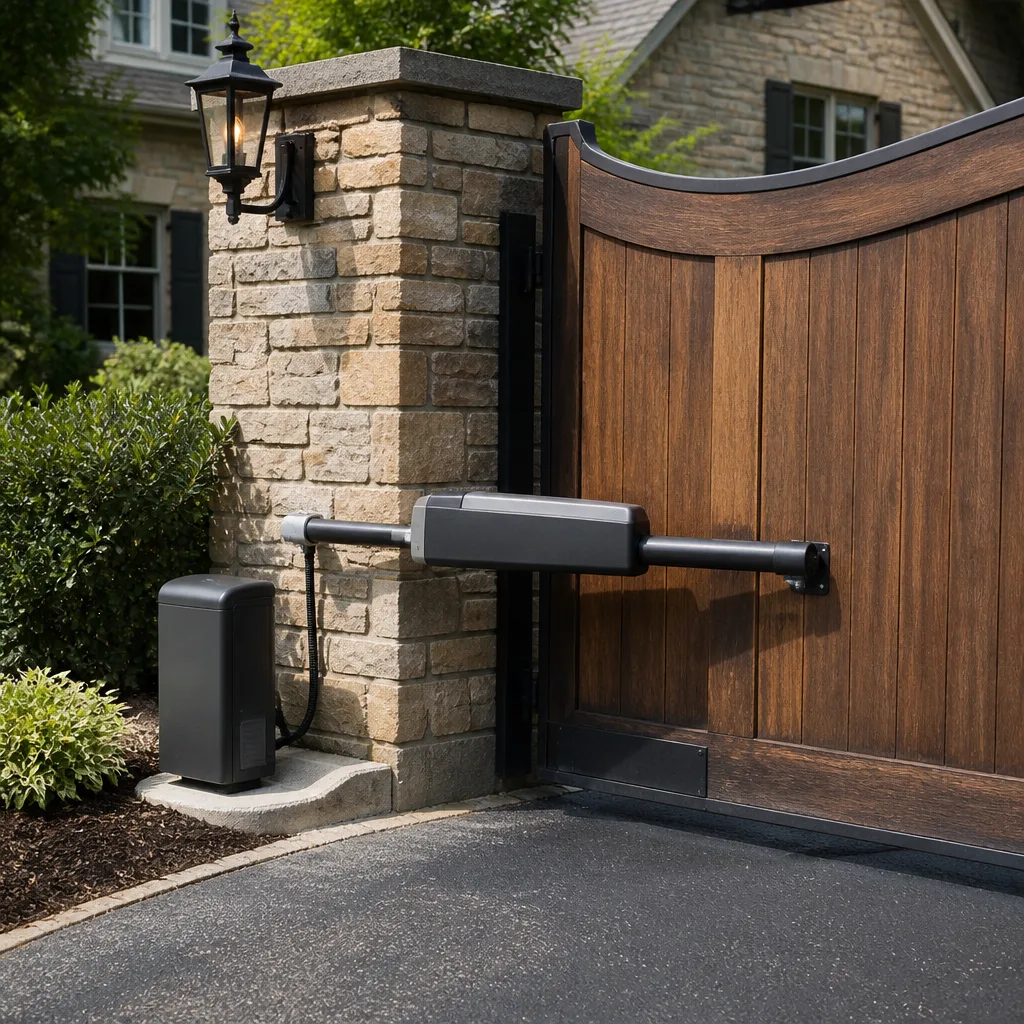 LiftMaster operators
Free on-site gate assessment - hinges, posts, and your LiftMaster or Nice gate operator checked before anything is quoted
The assessment is free and the quote is the invoice.
Get your free estimateGate Repair Emergency Preparedness Guide for Avondale Homes
Every automatic gate sold in Arizona is required to have a manual release, and yet in our experience, most Avondale homeowners have never once touched theirs. That’s the gap this guide closes. When an ambulance is idling at your curb, or a monsoon downpour is flooding the driveway, or the power cuts out at 11 PM and your gate won’t budge, you get about 90 seconds to make a decision that affects safety, access, and possibly a liability claim. Nobody makes a good decision in 90 seconds under pressure unless it was made in advance. So we’ll walk through how to find and test your release mechanism, what to check electrically after a storm, what belongs in a gate emergency kit, the information you should have written down right now, and how to judge whether a failure truly can’t wait. This is the guide we wish every Avondale gate owner had pinned inside a cabinet.
Quick Answer
If your automatic gate fails, the first move is always the manual release: locate the release lever or key on the operator, disengage the motor, and push the gate open by hand so nobody is trapped or blocked. Once the gate is safe, check the power supply, the breaker, and any visible damage before touching the operator controls again. Gate Repair Avondale handles emergency repair, electric gate repair, and installation, and our technicians have up to 12 years of experience with the systems most Avondale homes actually have installed. Call (866) 361-9597 for a free estimate.
Styles & brands we work with
- Wrought iron
- Wood & steel frame
- Farm & ranch
- Sliding driveway gates
- LiftMaster operators
Table of Contents
- Step One: Find and Test Your Manual Release Before You Need It
- Release Types Across Common Avondale Operators
- What to Do Electrically When a Gate Fails Closed After a Storm
- Building a Gate Emergency Kit for Under $30
- The Information Every Gate Owner Should Have Written Down
- After-Hours Repair Realities in Avondale
- Temporary Solutions That Hold a Gate Safely Overnight
- How to Tell If a Gate Failure Can Safely Wait
Step One: Find and Test Your Manual Release Before You Need It
A manual release is the mechanical bypass built into every automatic gate operator. It disengages the motor from the gate so the panel swings or slides freely by hand. Find yours today, in daylight, with nothing on fire and no one waiting. Three minutes now saves you a very bad night later.
Walk out to your operator and look for one of these:
- A release lever or handle on the operator housing. Common on residential swing operators. Lift or turn it, and you’ll hear the motor disengage.
- A keyed release. Some operators, especially heavier residential and light commercial units, use a key to unlock the release. Find that key now and hang it somewhere you can reach in the dark.
- A manual release chain. On some slide gates, a chain bypasses the drive. Pull it, and the gate rolls free.
- A bypass key switch or disconnect. On systems with access control, the intercom or keypad panel may have a manual override. Look for it on the inside of the property.
Once you’ve found the release, test it while the gate is idle and the power is on. Disengage the motor, push the gate open by hand, then reengage it and cycle the gate once with the remote. Confirm the gate returns to normal operation. If it doesn’t, that’s a release mechanism that needs service, and you’ve just discovered it at a convenient time instead of the worst one.
A gate should be pushable by a healthy adult with one hand once released. If it takes real force, the hinges, rollers, or track are binding, and that binding is exactly what burns out operators. An Avondale gate that groans through every cycle in the summer heat is telling you something. Listen.
Release Types Across Common Avondale Operators
Release mechanisms aren’t universal. Here’s how they break down across the brands we work with most often in Avondale:
- Linear: Residential swing and slide operators typically use a lever-style release on the housing. The lever is usually a simple pull-and-twist, and once disengaged the gate moves by hand with steady pressure.
- FAAC: FAAC covers both residential and heavier commercial systems, and release methods vary by model. Some use a keyed manual release, some a lever. On commercial units, the release is often inside a locked housing, so keep the key accessible.
- BFT: Similar story, model-dependent. You’ll find lever releases on smaller units and keyed releases on heavier ones. BFT systems installed for estate or multi-tenant use often include a dedicated manual release that requires a specific key.
- Viking: Viking operators generally use a straightforward release lever on the housing. It’s one of the easier systems to disengage by hand, which is a small mercy at 11 PM.
If you don’t know what brand your operator is, the model plate is usually on the housing itself, sometimes under a cover. Snap a photo of it with your phone and keep that photo somewhere you can find it. You’ll need that information later anyway, when you call for repair.
One safety note on gates specifically: the dangerous parts on a gate are the operator’s wiring, the heavy panels themselves, and slide gates that come off their track. Never put your hands near the operator’s internal mechanism while power is on, never try to lift or straighten a bent gate panel by hand, and never reach into a slide gate’s track or rollers while it’s moving or could move. The manual release exists to get you out of trouble; the operator wiring is a job for a trained technician. When in doubt, call a professional. We’d rather answer a nervous question at 11 PM than read about a serious injury.
What to Do Electrically When a Gate Fails Closed After a Storm
Monsoon season in Avondale brings wind, dust, lightning, and brief intense rain. A gate that fails closed after a storm is often a power or control board problem, and there’s a specific sequence that keeps you safe while you find out which.
- Release the gate by hand first. Before you touch a single wire or push a single button, disengage the motor and push the gate open so no vehicle or person is trapped. That may be all you need to do tonight.
- Check the power at the source. Confirm the breaker serving the operator hasn’t tripped. If it has, reset it once. If it trips again, stop and call a technician. A breaker that won’t hold is a signal, not an inconvenience.
- Look for visible storm damage. Downed branches on the wiring, water pooled in the operator housing, scorched or melted components, loose conduit. If you see any of that, do not operate the gate and do not attempt a reset.
- Check for a safety sensor fault. Photoelectric safety sensors are what stop a gate from closing on a person or vehicle, and a misaligned sensor during a storm will hold a gate open (or refuse to let it close). Clean the sensor lenses, check they’re pointed at each other, and confirm nothing is blocking the beam.
- Try a single reset of the operator. Power down the operator at the breaker, wait, and power it back up. Try one remote cycle. If it fails again, stop.
- Stop and call. If you’ve walked through those steps and the gate still won’t operate, stop touching it. Repeated resets on a fault can damage a control board further, and control boards are the single most expensive part of most operators outside the motor itself.
When you call, you’ll be able to tell us what you’ve already checked. That speeds up diagnosis and gets a technician to the right problem faster. If the operator is a brand we know, having the model number and a brief description of the symptoms puts us on a much shorter path to a fix. We handle electric gate repair across all nine brands we work with, from control boards to loop detectors to motor and actuator failures, and we can work with your insurer if a storm event turns into an insurance claim.
Building a Gate Emergency Kit for Under $30
You don’t need a commercial-grade emergency kit. You need four inexpensive items stored near the gate, and a plan for where they live so anyone in the household can find them.
- A flashlight with fresh batteries. Gate failures are inconvenient enough in daylight. In the dark, a flashlight is the difference between solving the problem and fumbling in the dark near moving parts. Check the batteries twice a year. Pick a date you’ll remember, like the change of the season.
- A printed card with your operator and installer details. Model number, brand, who installed it, and the phone number you’ll call for repair. Print it in large text and tape it inside a cabinet near the door to the driveway. Assume your phone may be dead or out of reach at the moment of stress.
- A roll of strong zip ties or a gate strap. For temporary holding. If a gate panel has slipped or a hinge has failed, you can secure the panel safely until a technician arrives. Never use zip ties on a gate that’s still under power; strap only after release.
- Your manual release key, on a dedicated hook. If your operator uses a keyed release, that key lives on a hook near the gate. Not in a drawer. Not in the garage. On a hook. Label it. Everyone in the household needs to know where it is.
That’s under $30 total, and it’s the difference between an organized response and a panicked one. We’ve worked on plenty of Avondale gates where the whole emergency was that nobody could find the key. Don’t be that call.
The Information Every Gate Owner Should Have Written Down
In a real emergency, the difference between a fast repair and a drawn-out search is whether you already have four pieces of information on hand. Write them down. Keep the list accessible. Update it if equipment changes.
- Operator brand and model number. This is the single most useful fact. It’s on the housing plate. If you don’t know it, take a photo now.
- The name and number of whoever installed your gate. If you don’t have this, note it as unknown and move to the next item. Installation expertise matters in repair, and if the original installer is available, that’s a valuable resource.
- HOA gate code contacts. If you live in an HOA in Avondale, the property manager or HOA board contact is who you call if the community gate fails. Keep that contact on your phone and on paper. HOA gates function differently from private residential gates, and the access-control system behind them usually belongs to the association, not the individual homeowner.
- Your utility company’s number for electrical emergencies. If the gate failure is part of a broader power outage, or you suspect a downed line or damaged electrical equipment, that’s a utility call before a repair call. Don’t touch wiring that could still be live.
One more item worth adding if you have a commercial or multi-tenant gate: the loop detector and intercom systems often have their own control panels. Note where they are. If a commercial gate fails and tenants are blocked from entering, the fix isn’t always the gate itself; sometimes it’s the loop detector, the intercom wiring, or the control board that governs access. That’s why we keep electric gate diagnostics on staff and don’t hand off that part of the job.
After-Hours Repair Realities in Avondale
Avondale is a city of families and commuters who need their driveways working when they’re working. That means gate failures happen on the schedule of real life, not the schedule of a service call. Here’s how after-hours gate repair actually works and what to expect.
The price for an urgent repair is set per job by the written estimate you receive before any work starts. It’s not a premium scaled up because it’s late; it’s a quote for the specific fix your gate needs. We answer 24/7, and a call outside dispatch hours is booked into the next opening, Sunday through Friday, 7am to 7pm. If your gate fails at 11 PM, call and we’ll get you on the schedule for the next available window. Fast dispatch from 7am to 7pm means you’re not stuck waiting indefinitely for someone to call you back.
The important thing to understand is that a phone call at 11 PM doesn’t always mean a technician at your gate by midnight. Many gate failures that feel emergent at the moment are safe to manage with the manual release overnight and repair in the next dispatch window. That’s why the “can this wait?” decision matters so much. We’ve put together a triage framework below so you can answer that question on your own, calmly, when it happens. And if you’re not sure, call. We’d rather have a two-minute conversation that confirms you’re safe than have you guess.
This is also the moment to lean on gate repair as a specialty. A general handyman who shows up after hours and doesn’t know your operator will spend more time diagnosing than fixing. We’ve worked on nine brands of gate operators across residential, commercial, and estate-grade systems, so we’re usually well ahead of the diagnostic curve before the technician pulls in. From the motor to the panel, that’s the difference.
Temporary Solutions That Hold a Gate Safely Overnight
If a repair can wait until the next dispatch window, the right move is to hold the gate safely and leave it alone. Here are the temporary options, in order of safety.
- Manual release, gate open, secured by hand. This is the safest overnight option for a swing gate: disengage the motor, push the gate fully open, and block or secure it so it can’t drift closed on its own. A heavy rubber wheel chock or a properly placed gate strap works. Never rely on a bungee cord or a brick alone.
- Manual release, gate closed and strapped. If security is the priority and the gate panels are intact, disengage the motor and strap the gate closed. This is not the right choice if the gate is damaged or the hinges are compromised, because a panel that’s already failing can drop.
- Do not use the operator in bypass mode. Some systems have a bypass that keeps the motor disengaged but leaves the controls active. Don’t use it as a temporary fix. Get the gate fully disengaged or fully operational; halfway states are where people get hurt.
- Never tape or prop a damaged panel with improvised materials near live wiring. If you can see exposed conductors, wet components, or scorched plastic, keep everyone away and call a technician. That’s not a temporary-fix scenario.
Whatever you choose, tell anyone in the household who uses the gate what you’ve done and why. And if the gate is a slide gate, confirm it’s fully on its track before you leave it. A slide gate that’s off its rollers is a serious hazard, not a minor inconvenience. Call us if you’re not sure how to judge that safely.
How to Tell If a Gate Failure Can Safely Wait
The single most important skill this guide can teach you is the ability to triage a gate failure. Not every failure is an emergency, and treating every failure like one is how people get hurt trying to fix things they shouldn’t. Here’s the framework.
Treat it as an emergency if any of these are true:
- A vehicle or a person is trapped by the gate.
- The gate is hanging, off its track, or visibly unstable and could fall.
- You see exposed wiring, scorch marks, water in the operator housing, or smell burning.
- The gate is a critical access point for a medical need in the household (a caregiver, a family member with mobility equipment, a delivery of medical supplies).
- The gate’s failure is blocking a shared access point for multiple residents in an HOA or commercial property.
It can safely wait for the next dispatch window if:
- The gate is intact, secure, and simply won’t operate.
- You’ve disengaged the manual release and can move the gate by hand.
- There are no visible signs of damage, moisture, or smoke.
- You have an alternate way in and out of the property (a pedestrian gate, a second access point).
When the answer isn’t obvious, err toward calling. It costs nothing to talk through the situation with someone who knows the equipment. We answer 24/7, and a simple conversation can tell you whether to strap the gate and sleep, or to keep everyone away from the gate and get a technician scheduled for the next opening.
Common Mistakes to Avoid
- Never testing the manual release. Most Avondale homeowners have never touched their release mechanism, which means the first time they try is under stress. Test it in daylight, with the power on and nothing at stake. If it doesn’t disengage cleanly, get it serviced before you need it.
- Forcing a gate that’s binding. A gate that takes real effort to push by hand is binding, and every forced cycle wears out the operator and the hinges further. That binding is a fixable problem; ignoring it turns into a motor replacement.
- Repeatedly resetting a faulting operator. If a breaker trips twice, stop. Repeated resets can take out a control board, which is the expensive part of most operators. One reset is a diagnostic step, not a fix.
- Storing the release key somewhere inaccessible. A keyed release doesn’t help if the key is in a junk drawer in the garage and it’s dark and raining. Put it on a dedicated, labeled hook near the gate.
- Messing with operator wiring without knowing what’s live. Operator wiring is the most dangerous part of your gate, and Avondale monsoon storms can leave it in states that aren’t obvious by looking. If you see moisture, damage, or exposed conductors, keep hands off and call.
- Ignoring the HOA side of a community gate. If your Avondale home has an HOA gate, the association is usually the party responsible for the access-control system and the repair call. Not knowing who to call when the community gate fails is a common and avoidable delay.
- Assuming the brand doesn’t matter. A technician who knows how to release a Linear swing operator may not know the control panel on a BFT or FAAC system. When you call, the brand and model number matter.
See the difference
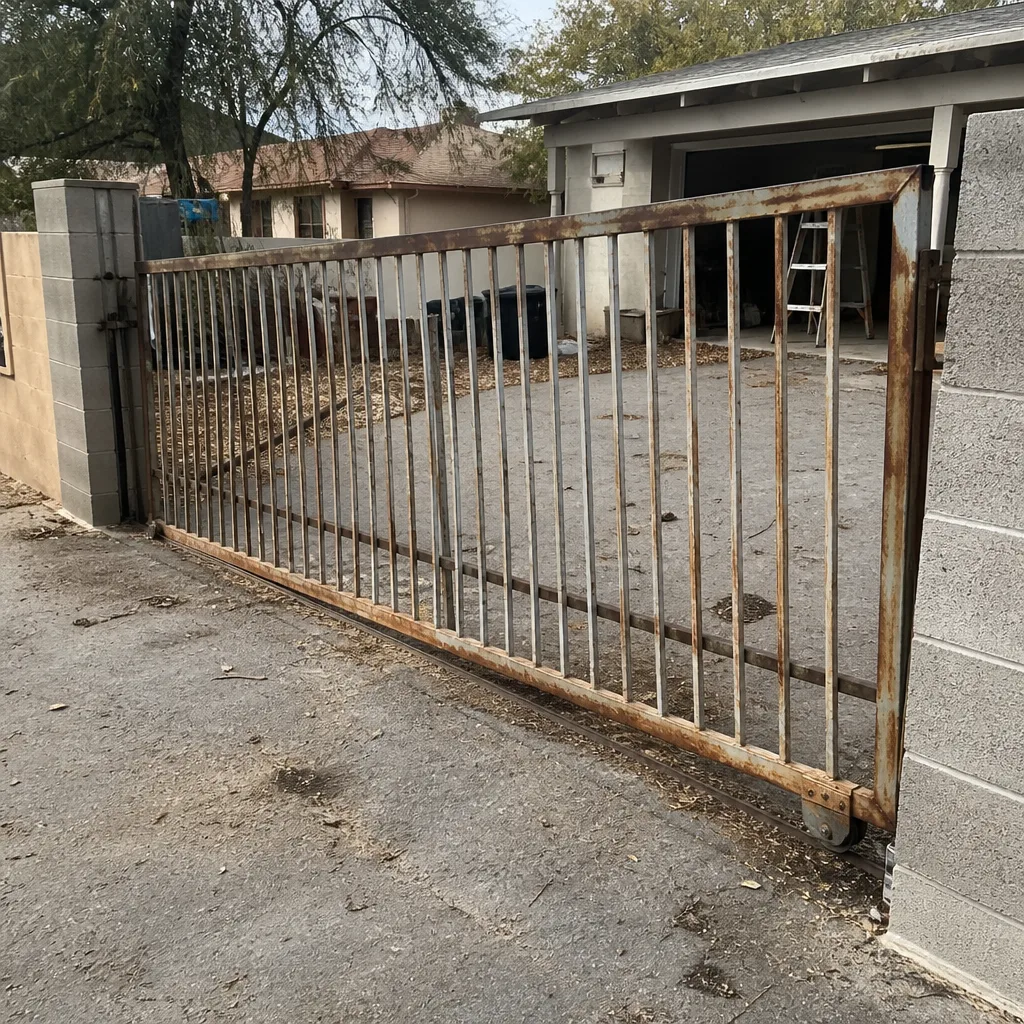 Before
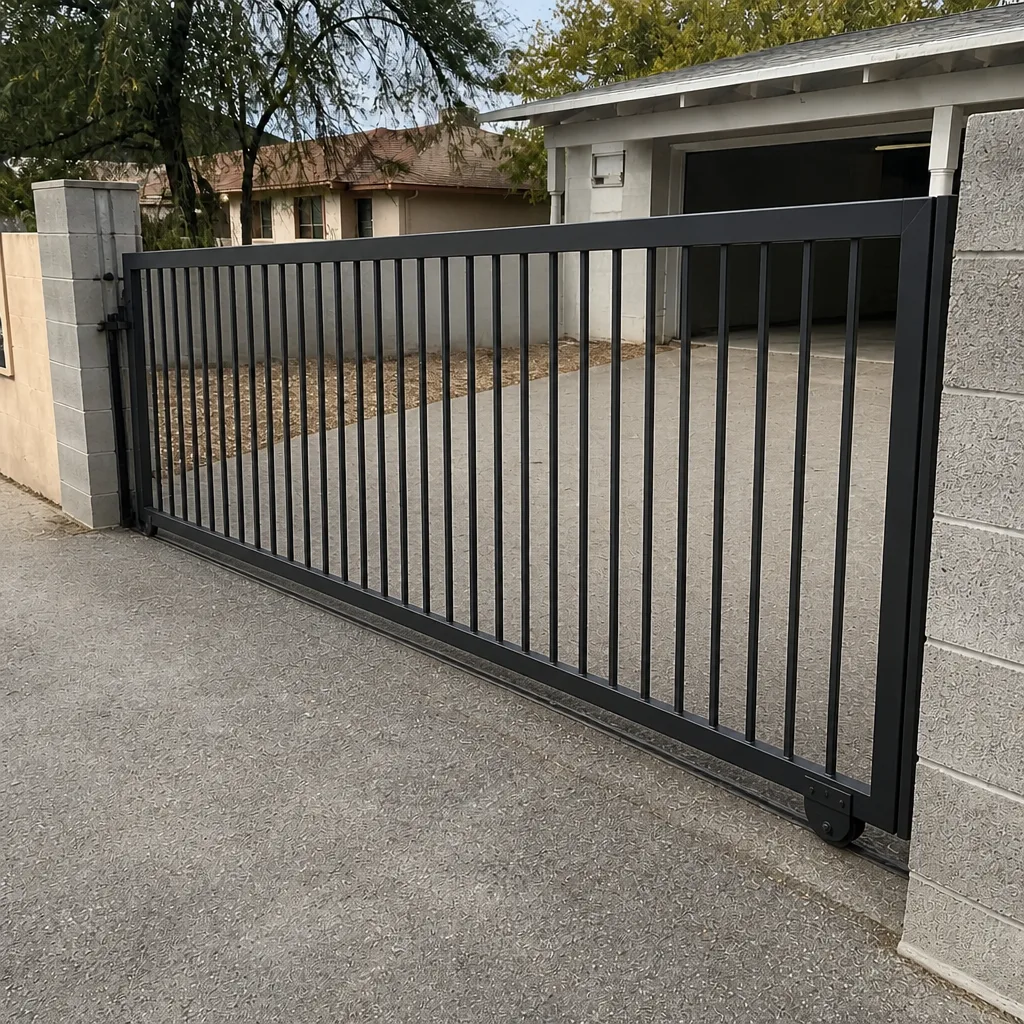 After
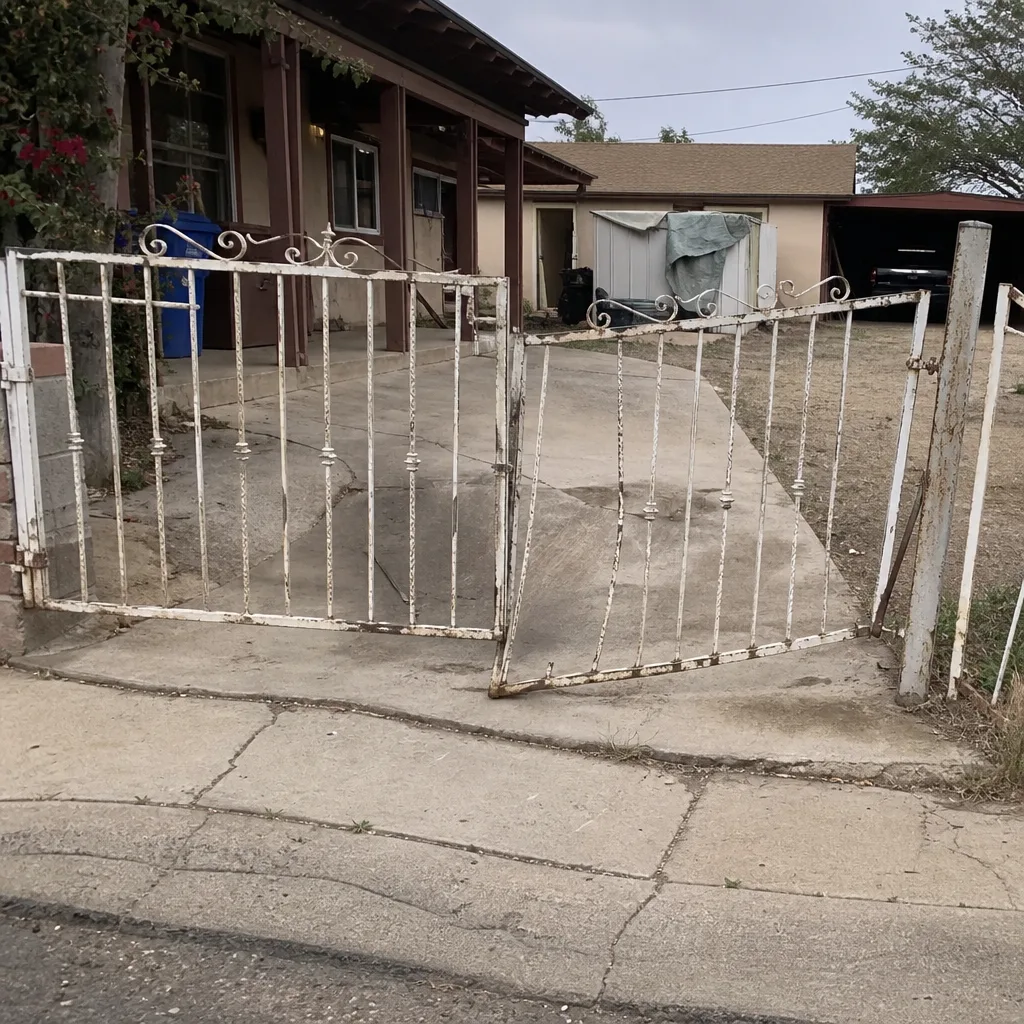 Before
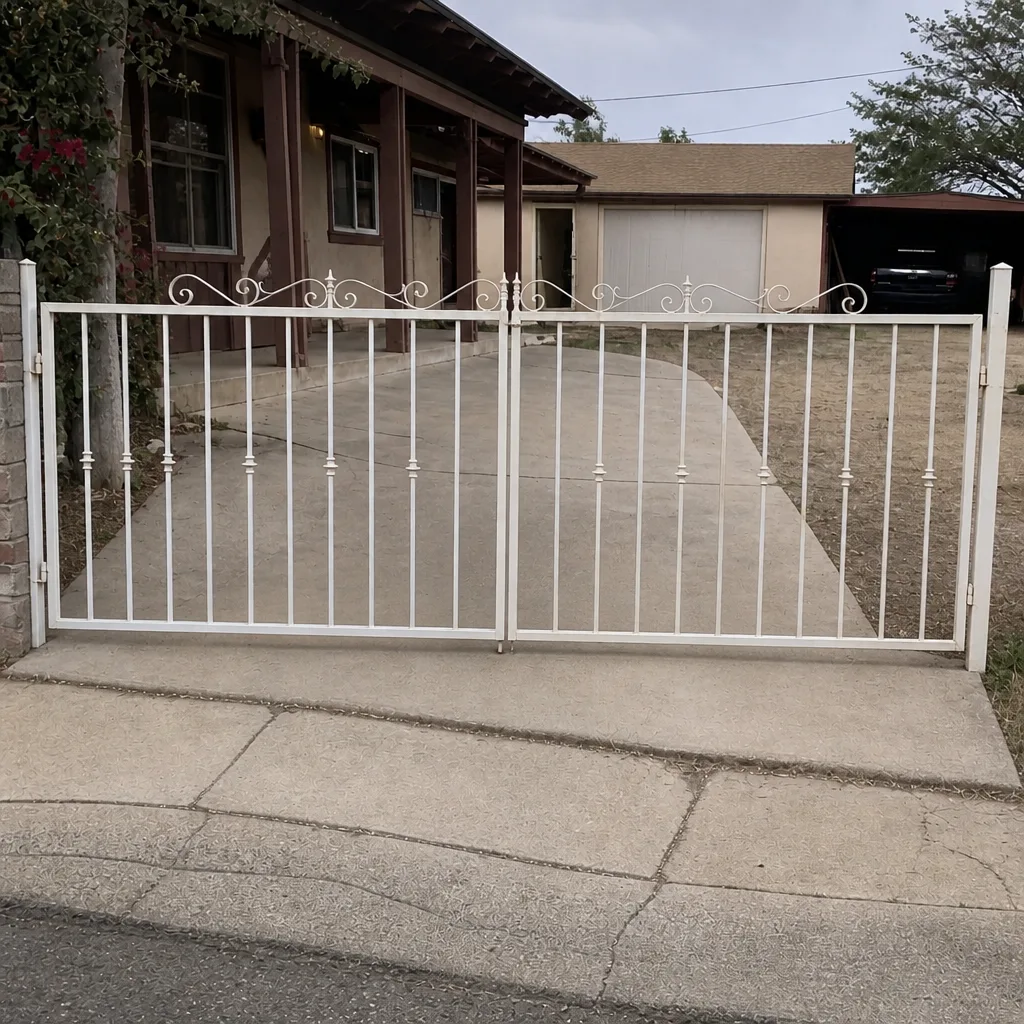 After
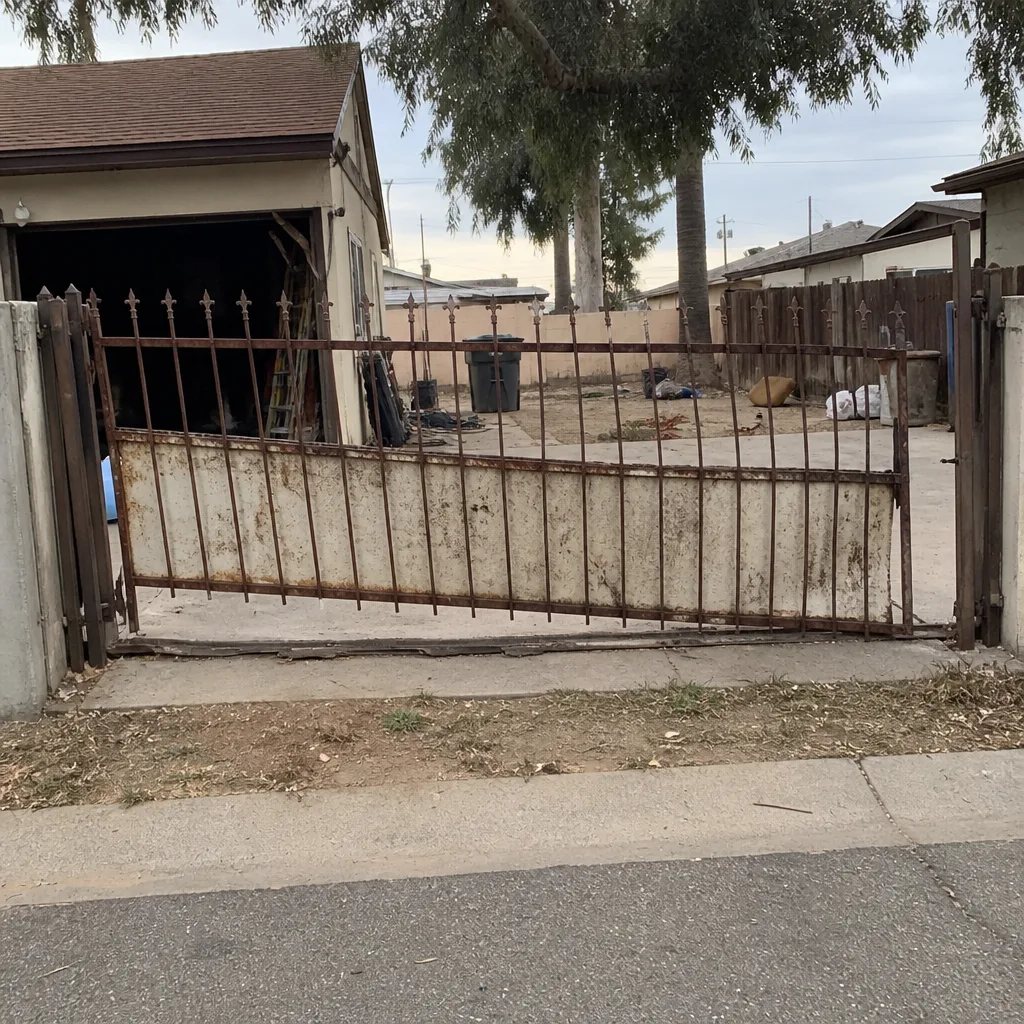 Before
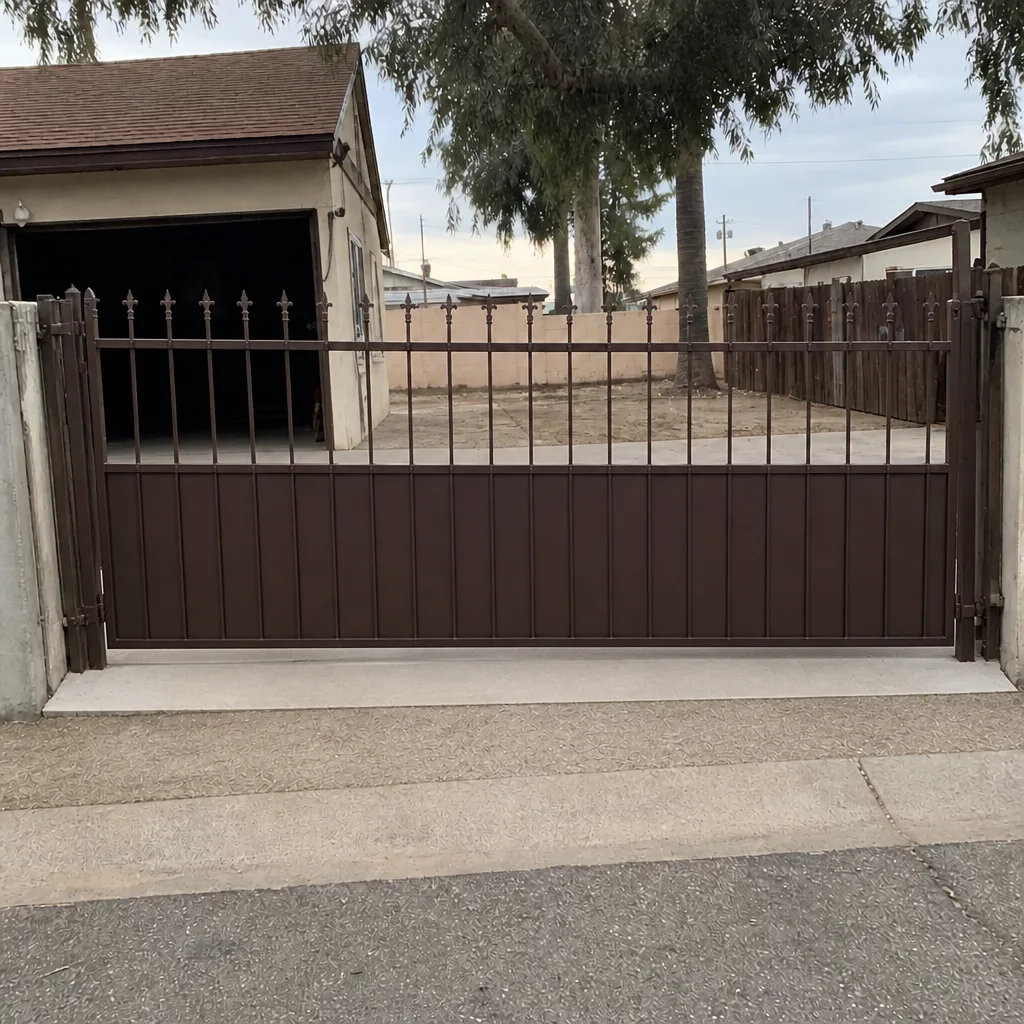 After
When to Call a Professional
Call a professional the moment a gate failure involves a trapped vehicle or person, a visibly unstable panel, a slide gate off its track, any sign of electrical damage, or a household that depends on the gate for medical access. Call for anything beyond a manual release and a single breaker reset. Call when the operator cycles but the gate won’t move, when the control board light pattern is doing something that doesn’t match the manual, or when a keypad or intercom has stopped responding to remote commands. Call when the brand on the model plate isn’t one you recognize. Gate Repair Avondale offers free estimates in Avondale and handles repair, electric gate repair, and installation. Call (866) 361-9597. We answer 24/7. Fast dispatch from 7am to 7pm, Sunday through Friday.
Frequently Asked Questions
It depends on the operator, but on most residential Avondale gates the manual release is a lever or a keyed mechanism located directly on the operator housing, usually under a small cover. On some slide gates it’s a release chain. If you can’t find it, take a photo of your operator housing and look up the brand and model number. Most Avondale homes have one of the brands we work with, and a photo often lets us point you right to it.
Yes. Every automatic gate operator sold for residential use includes a manual release designed exactly for that situation. Disengage the motor with the release lever or key, then push the gate open by hand. Reengage the release once power returns, and cycle the gate once to confirm it operates normally. If the release doesn’t disengage cleanly, call us. It’s a fixable issue, and it’s worth fixing before the next outage.
First, release the gate by hand so nobody is trapped. Then check the breaker, look for visible storm damage to the wiring or operator housing, clean and check the photoelectric safety sensors, and try one power cycle. If the gate still won’t operate, stop and call. Repeated attempts to cycle a faulting operator after a storm can turn a small fix into a control board replacement, and that’s the part nobody wants.
No. The price is set per job by the written estimate you receive before any work starts. We don’t add a premium for a late-night call, and we don’t charge for a conversation about whether your gate failure can safely wait. If you’re not sure, call us at (866) 361-9597 and we’ll talk it through. The estimate itself is free.
Sometimes, yes. If the gate is intact, the panel is stable, and you’ve disengaged the motor with the manual release, leaving the gate fully open and secured so it can’t shift is safer than forcing a failing operator. Do not leave it open if the panel is damaged, off its track, or the hinges are compromised. If you’re not sure, call and describe it, and we’ll tell you which is safer.
It’s an emergency if a vehicle or person is trapped, the gate is unstable or off its track, you see exposed wiring or signs of electrical damage, or the gate is the only access for someone with a medical need. It can wait if the gate is intact and secure, the manual release works, and there’s an alternate way in and out. Everything else is a judgment call, and calling to talk it through is the right move when the judgment isn’t obvious.
The Bottom Line
The best gate emergency response is a rehearsed one. Locate and test your manual release today. Put four cheap items in a kit near the gate and print a card with your operator details, installer contact, and utility number. Learn the electrical sequence for a post-storm failure so you know when to stop and call. Keep your brand and model number where anyone in the household can find it. If you’re in Avondale and your gate is one of the brands we work with, or you’re not sure what it is, one call to Gate Repair Avondale is often all it takes to turn a confusing failure into a scheduled fix. Call (866) 361-9597. Our technicians have up to 12 years of experience, we cover nine brands including FAAC, BFT, Linear, and Viking, and our estimates are free. For readers who want a broader look at the area we serve, this Avondale overview and the repair-focused gate service page go deeper. Call (866) 361-9597 for a free estimate and a written price before any work begins.
Written by the team at Gate Repair Avondale.