
Last updated November 15, 2026
 Wrought iron
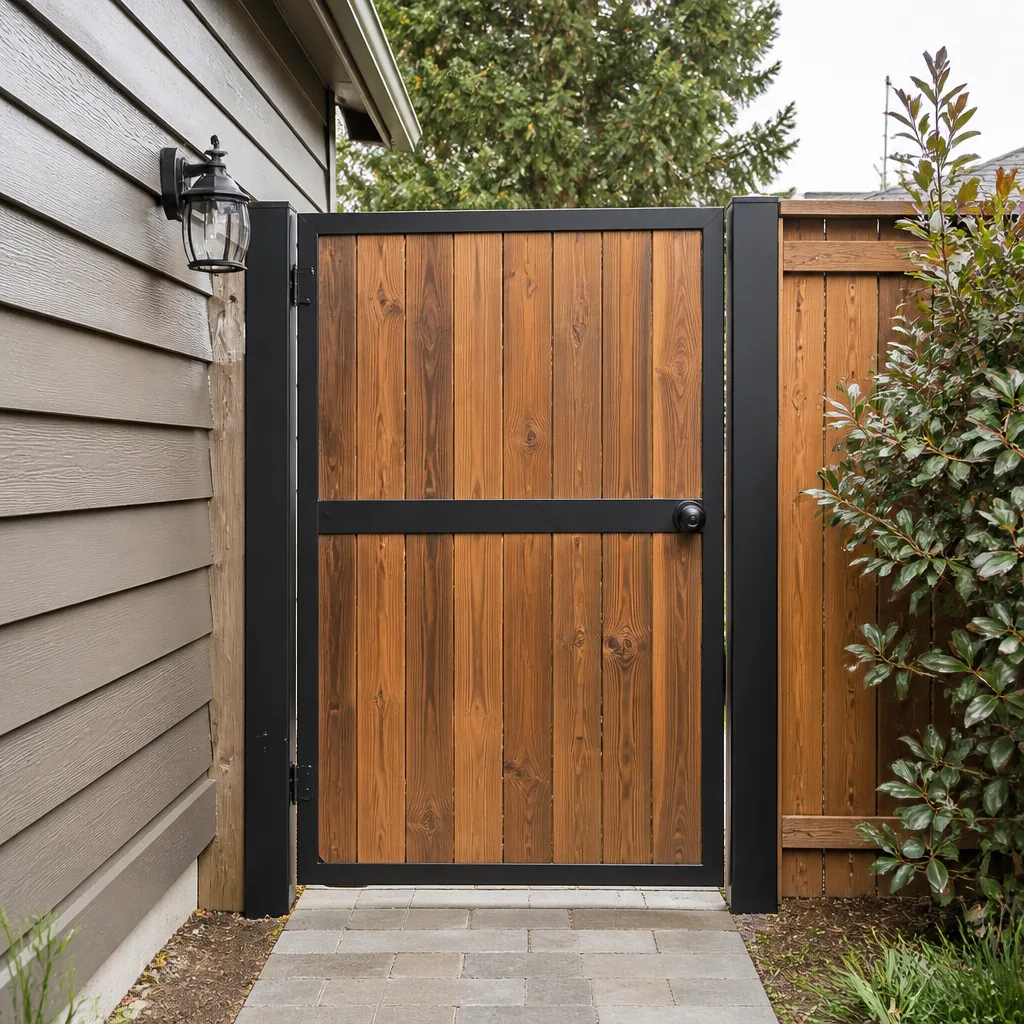 Wood & steel frame
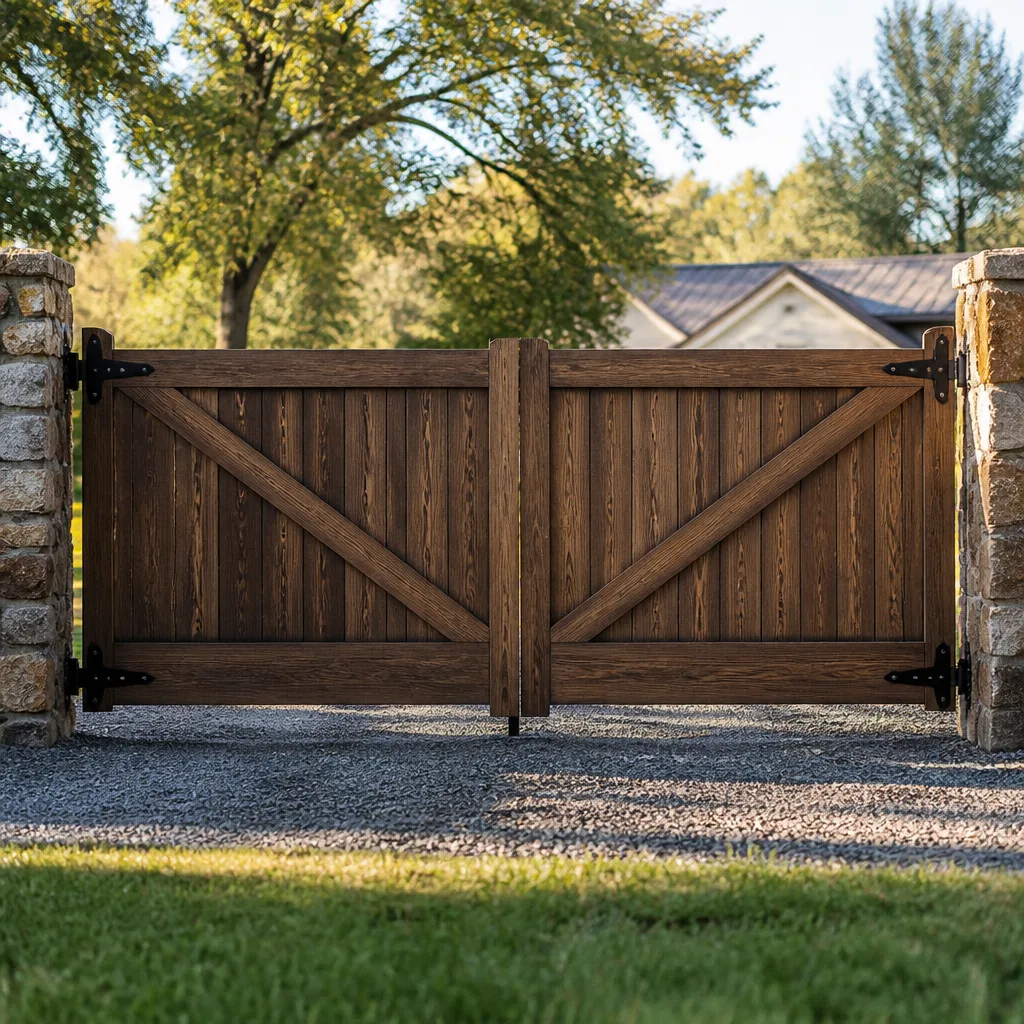 Farm & ranch
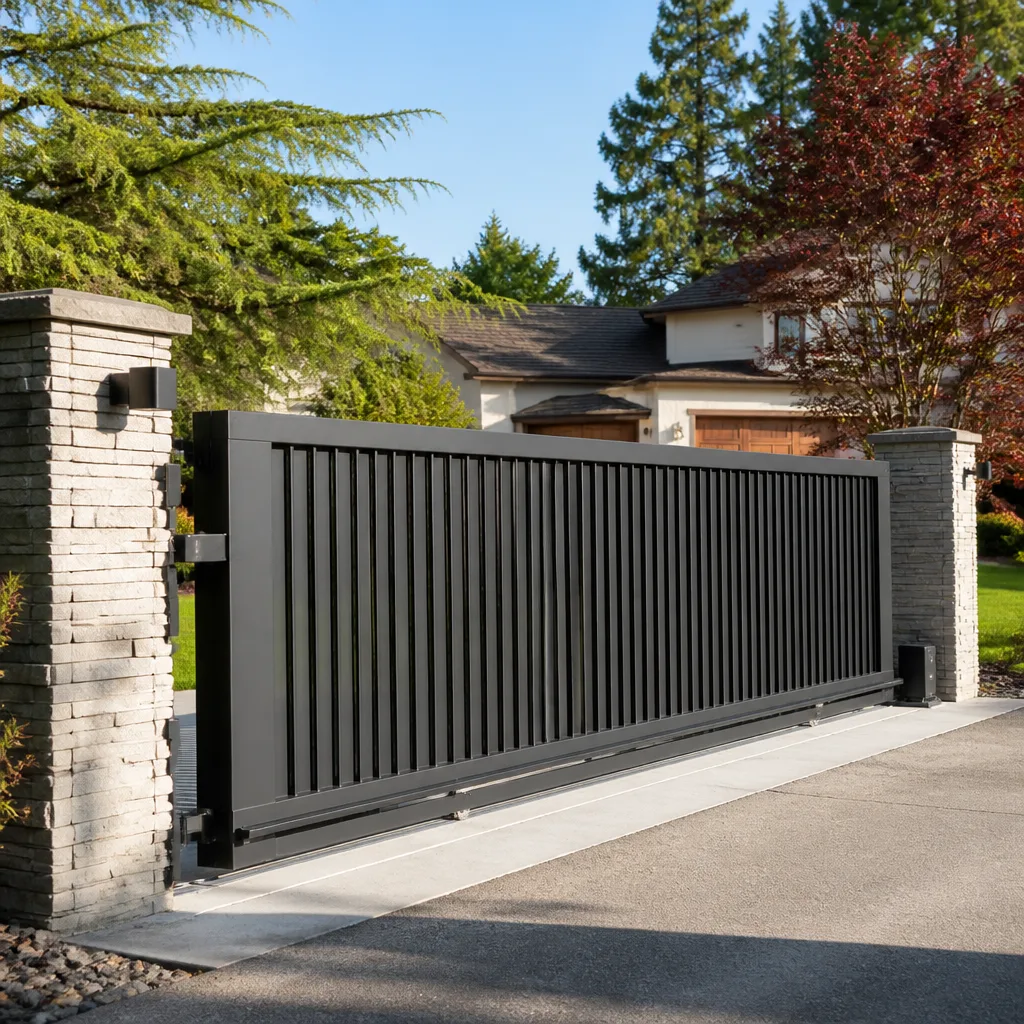 Sliding driveway gates
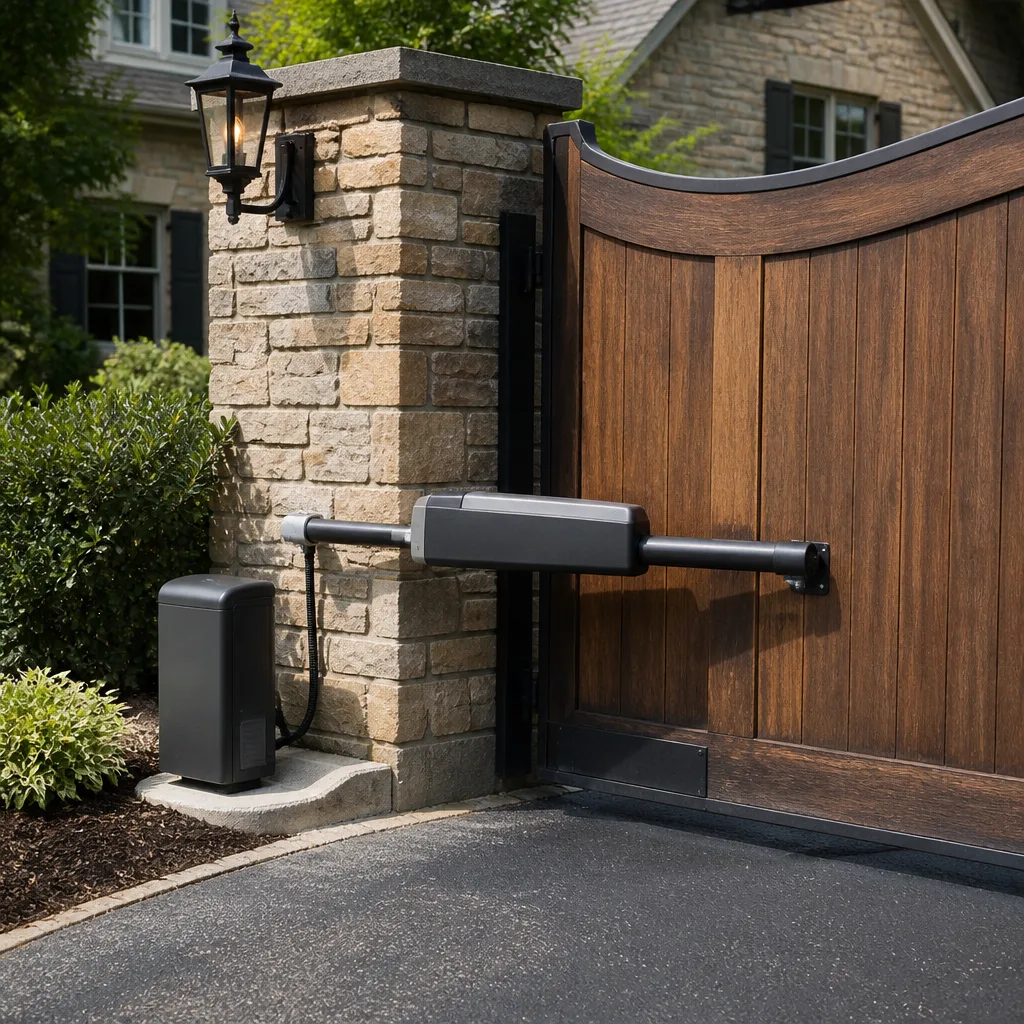 LiftMaster operators
Free on-site gate assessment - hinges, posts, and your LiftMaster or Nice gate operator checked before anything is quoted
The assessment is free and the quote is the invoice.
Get your free estimateGate Repair Maintenance Schedule: What to Do and When
If your gate maintenance reminder is set for “every six months,” you’re probably servicing it at the wrong time. Inspecting hinges in February misses the stress that June heat and August dust storms will put on them within weeks. A gate in Avondale doesn’t live in a neutral climate. It lives through months of 100°F-plus days, a summer monsoon that throws sand and debris at moving parts, and a mild winter that gives you a real window to prepare. A calendar-based schedule built for a temperate city will have you greasing a chain right before the dust season gums it up. What follows is the schedule we actually recommend for the desert Southwest: weather-event-driven, season by season, component by component. You’ll learn what to check, when to check it, and how to log it so a technician can tell wear from a one-time event.
Quick Answer
For an Avondale gate, time maintenance to the weather rather than the calendar: do a deep lubrication and hardware inspection in the cool winter months, prep the operator and batteries before the summer heat peaks, clear tracks and photo-eyes before monsoon season, and run a full post-storm inspection after any haboob or heavy rain. Electric operators, safety sensors, and battery backups need attention at least four times a year here, not twice, because heat and dust attack them faster than in milder climates. Log every inspection so a technician can tell whether a failure is normal wear or a one-time event.
Styles & brands we work with
- Wrought iron
- Wood & steel frame
- Farm & ranch
- Sliding driveway gates
- LiftMaster operators
Table of Contents
- Why an Avondale Gate Ages Differently
- Winter: The Cool-Down Window for Real Repairs
- Pre-Summer: Heat-Proofing the Operator and Batteries
- Pre-Monsoon: Dust, Debris, and Sensor Prep
- Post-Haboob and Post-Storm Inspection Checklist
- Choosing the Right Lubricant by Season
- How to Log Maintenance So a Tech Can Diagnose Faster
- Manual Gates vs. Automated: Different Rhythms
Why an Avondale Gate Ages Differently
A gate in a mild, humid climate deals with rust and moisture. A gate in Avondale deals with abrasion and heat. Those are different enemies, and they call for a different maintenance schedule. The West Valley sits in the Sonoran Desert, and that means two things dominate the wear on your gate: fine airborne dust most of the year and a summer monsoon that arrives with wind-driven sand and sudden rain.
Dust is the quiet problem. It settles on every exposed moving surface (rollers, hinges, chains, tracks, and the pivot points on swing arms) and then heat bakes it into a gritty paste. Every time the gate cycles, that paste acts like sandpaper. Over a summer, a gate that never sees maintenance can wear through hardware that should have lasted years.
Heat is the other half. Electric operators sit in full sun on a wall or post, and the internal components (control boards, motors, and especially battery backups) run hotter than ambient air. Motor duty cycles, battery capacity, and even the flexibility of wire insulation all change in sustained triple-digit temperatures. An operator that behaves perfectly in March can fail in July simply because it’s been cooking since May.
That’s why a six-month plan is the wrong shape for Avondale. The components that fail in August were stressed in June. If you inspect after the failure, you’ve already lost the gate. If you inspect before the stress, you catch it. The four checkpoints below are built around that idea. They apply whether you’re in a single-family home near the center of Avondale or managing a commercial entry along a busy corridor. If you’re dealing with a failing component right now rather than planning ahead, a gate repair visit is the fastest way to get an honest diagnosis before you build a schedule.
Winter: The Cool-Down Window for Real Repairs
Winter is when you do the work that’s too uncomfortable or too slow to do in summer. Cooler days make long outdoor inspections practical, and they give you a window to fix what the previous year wore out before the next heat cycle starts. Treat winter as your “reset” season.
- Inspect every hinge and pivot. Look for play, wobble, or rust at the pivots. A hinge with side-to-side movement will eventually drop the panel and load the operator. Tighten or flag for replacement.
- Check the post footing and mounting bolts. Look for lean at the posts and loose anchor bolts at the brackets. A post that has shifted even slightly will throw off alignment and put constant strain on the operator.
- Test the gate’s manual swing or slide. Disconnect the operator (most have a manual release) and push the gate through its full arc or track by hand. If it binds, sticks, or feels heavy, the mechanical side needs attention before the operator pays the price.
- Inspect panel condition. Check for loose pickets, bent frames, and any damage near the bottom rail where ground-level debris scrapes.
- Clean and repaint bare metal. Touch up any spots where paint has chipped. Desert sun degrades exposed steel and aluminum over time, and bare metal starts pitting faster than you’d expect.
- Verify the safety sensors. Test the photo-eye and any contact edges. On automated gates, safety devices are non-negotiable.
If your winter inspection turns up alignment issues, operator faults, or a control board that won’t hold a setting, that’s the right time to schedule a repair visit. Winter is also the season when you’ll have the widest scheduling flexibility. Get it done now, not in August when everyone with a stuck gate calls at once. This is also a good moment to think about whether an aging manual gate should be upgraded. If you’re weighing an operator install, electric gate repair and our installation service happen to share the same technicians, which means the diagnosis and the fix come from the same understanding of how the system was built.
Pre-Summer: Heat-Proofing the Operator and Batteries
This is the checkpoint most homeowners skip, and it’s the one that matters most in Avondale. Before the first stretch of triple-digit days, spend an hour on the operator and its power. Everything you protect now is something that won’t strand you in July.
Battery backup is the priority. Most automated gates use a sealed lead-acid (AGM) style battery for backup. AGM batteries lose capacity fastest in sustained heat, and their internal chemistry accelerates aging well above normal room temperature. An operator with a two-year-old battery that tested “fine” in spring can be dead in three days of August. Don’t wait for a power blink to find out. Test the battery by simulating a power loss (with the gate in a safe, clear position) and confirming it still cycles the gate to a safe state.
Operator ventilation and cooling. Control boards live in a housing. In the desert, that housing can be a heat trap. Check that the enclosure vents aren’t clogged with dust, that the housing isn’t mounted where it bakes in direct afternoon sun with no air movement, and that no debris or nesting has gotten inside. A board that’s been running hot all summer is more likely to fail in a power surge or brownout, which happens more often during monsoon season.
Inspect wiring and connections. Look at the low-voltage control wiring, the safety sensor wires, and the power run to the operator. Heat makes insulation brittle. Loose terminals that were fine in cool weather can arc when the board is hot. Snug every terminal screw and check for nicked wire jackets.
Test the full cycle under load. Run the gate through several complete cycles with the operator connected. Listen for hesitation, grinding, or a motor that’s running hot to the touch. On commercial systems (DoorKing access controls, BFT and FAAC heavy-duty operators), also check the duty cycle: is the operator rated for the traffic it’s actually seeing? Overworked commercial operators in summer heat are the most common failure we diagnose.
If your pre-summer inspection finds a dying battery, a control board acting up, or an operator that’s cycling badly, call (866) 361-9597. We answer 24/7 and can get a technician out for a proper diagnosis with fast dispatch from 7am to 7pm, Sunday through Friday.
Pre-Monsoon: Dust, Debris, and Sensor Prep
Monsoon season in the desert Southwest is predictable enough to plan around. You can’t stop a haboob, but you can make sure your gate is ready when one hits. This pre-monsoon pass focuses on everything that a wind-driven dust wall runs straight into: the tracks, the sensors, the photo-eye lenses, and the control enclosure.
- Clear the track or rail. On slide gates, sweep or blow out every grain of sand and debris. Packed grit is the single most common cause of a slide gate coming off track, and one storm can deposit the equivalent of a season’s worth of grit in the channel.
- Clean the photo-eye lenses. Photo-eyes are your safety device. A dusty lens can reflect or scatter the beam, and the operator will read it as an obstruction. Clean the lenses with a soft cloth and check the alignment. Test by deliberately blocking the beam and confirming the gate reverses.
- Check safety contact edges and loop detectors. On commercial entries with loop detectors built into the driveway, verify the loops respond properly. A loop that false-triggers in wet conditions will leave the gate stuck open. This matters for access control setups in commercial Avondale properties.
- Inspect the control enclosure for weather resistance. Confirm the enclosure gasket is intact, vents are clear but screen-covered, and no gaps will let driven rain get to the board. A board that takes an unexpected soaking is a very expensive afternoon.
- Trim vegetation and clear debris lanes. Branches that fling in a storm or leaves and tumbleweeds that lodge in a track cause bind-ups. Cut back anything overhanging the gate’s path.
- Verify the manual release works. If the gate is automated, confirm you can manually release it in an emergency. In a storm, an operator with a dead battery may need to be moved by hand.
If your gate uses a Mighty Mule or Ghost Controls operator on the homeowner side, or a LiftMaster or FAAC system on a larger property, the pre-monsoon checklist is the same. Sensor health and track cleanliness don’t care what badge is on the housing. What matters is that you catch the problem before the wind does.
Post-Haboob and Post-Storm Inspection Checklist
This is the step almost every national maintenance guide leaves out, and it’s the one most relevant to Avondale. After any significant dust storm, haboob, or heavy monsoon rain event, do a walk-through inspection. Don’t wait for a scheduled maintenance date. Storms leave specific debris and damage in specific places, and the sooner you address it, the less it costs.
- Photo-eye lenses. Dust coats a lens in a fine film that’s easy to miss but wrecks alignment. Wipe both lenses and re-test the safety reverse.
- Track debris. Blow out or sweep the track clear of sand, gravel, leaves, and any small objects the wind drove in. Check that the track is still straight and anchored.
- Control board ventilation. Driven dust can clog enclosure vents. Inspect the housing, blow out the vents gently with low-pressure air, and check that the board isn’t sitting in a dust pile.
- Hinge and pivot movement. Grit in a hinge acts like a grinding paste. Test the gate by hand (with the operator released) and feel for sticking or roughness. If it binds, the hinge needs cleaning and relubrication immediately.
- Panel and frame damage. Look for bent pickets, popped fasteners, or impact damage from flying debris. Even a small bend can throw the gate out of alignment and strain the operator.
- Wiring and connections. Check the exposed low-voltage wiring for abrasion or disconnection, especially at the sensor mounts and operator terminals.
- Post-storm full cycle. Run several complete cycles and watch the gate’s motion. Any hesitation, reversed direction, or partial open/close needs a technician’s eye.
Do this checklist once after a major storm, and note what you found. If the same issue shows up after every storm, it’s not a one-time event. It’s a weakness in the system, and it’s worth fixing before the next one. For the broader repair side of things, our Gate Repair Avondale page covers the full range of failures we see in this climate.
Choosing the Right Lubricant by Season
Lubrication is the most misunderstood piece of gate maintenance, and in the desert it’s where most people accidentally make things worse. The grease that’s right for January will attract dust and gum up rollers by July. Choosing the right product by season is not optional in a high-dust environment.
Winter (cooler, drier months): This is the season for heavier products. A quality lithium or molybdenum grease on hinge pins, rollers, and pivot points holds up during the season when dust is relatively low and temperatures are moderate. Grease stays where you put it and provides good protection through the winter. Apply it to pivot points and any bearing surfaces, but not to tracks, chains, or contact areas where grit needs to fall away rather than stick.
Pre-summer: As temperatures climb, switch strategy. Lighter, dry-film lubricants or a very thin oil on hinge pins and pivots will not trap dust as aggressively and won’t run off in heat. Avoid heavy grease on anything exposed to sun and dust during the hottest months, because once a heavy grease layer gets grit embedded in it, it will abrade moving parts faster than no lubrication at all.
Pre-monsoon and monsoon season: The priority shifts to keeping grit from sticking. Use a dry-film or graphite-type lubricant on pivot points. Keep chains lightly oiled but not greasy. Keep tracks clean and dry. The goal here is minimal-dust attraction, not a thick protective coat.
What not to do:
- Don’t use WD-40 as a primary lubricant. It’s a solvent and water displacer, not a long-term lubricant, and it washes away the protection you do have.
- Don’t grease a chain that runs on a track or rail. The chain should be lightly oiled, not caked.
- Don’t spray grease onto photo-eye lenses or sensor arms. Use a dry cloth and skip the lubrication entirely on optical surfaces.
- Don’t over-lubricate hinges. Excess grease attracts dust and turns into grinding paste. A thin, even film is better than a thick coat.
The right lubricant protects moving parts and keeps dust from sticking. The wrong one becomes an abrasive. In Avondale, that difference shows up in a single season.
How to Log Maintenance So a Tech Can Diagnose Faster
This is the section most people ignore, and it’s the one that saves the most on diagnostics. When a technician visits, the fastest way to diagnose a failure is to know whether it’s wear-related (gradual, consistent with age and use) or a one-time event (a single storm, a power surge, an impact). If you have a log, the technician doesn’t have to bill time reconstructing what happened. The log tells them.
What to log:
- Date and reason. Every inspection, every maintenance task, and every symptom. Write the date, what you did, and what you found.
- Component condition. Note the condition of hinges, rollers, track, operator, sensors, and battery each time you check. Use a simple rating like good / watch / replace, rather than long descriptions.
- Weather event notes. When a storm hits, note the date, the type of event (haboob, heavy rain, wind), and any damage or debris you found. This is the most useful single piece of information on the log.
- Any behavior changes. Is the gate opening slower? Reversing unexpectedly? Beeping or flashing a fault code? Note the date and what you observed. Pattern changes are diagnostic gold.
- Repairs and parts. Track any replacement parts, their date, and who did the work. This prevents double-diagnosis when a part fails early.
How to keep it: A simple notebook in the operator enclosure or a notes app on your phone works fine. The format matters less than the habit. Log after every inspection and every weather event, not just when something breaks. When a technician shows up, hand them the log. A failure that consistently appears after every major wind event is a different problem from one that appears on a random Tuesday with no clear cause. Our technicians have up to 12 years of experience reading exactly this kind of pattern, and a log makes their job faster and your bill smaller.
Manual Gates vs. Automated: Different Rhythms
The schedule above applies to both manual and automated gates, but the emphasis shifts. A manual gate lives or dies on its hinges, pivots, and alignment. An automated gate adds an operator, control board, safety sensors, and battery, and each of those has its own maintenance rhythm.
Manual gates need hinge and pivot inspection most. The failure mode is gradual: a hinge gets gritty, the panel starts to drag, the post takes strain, and eventually the gate sags and won’t close. Winter and post-storm inspections catch this. A manual gate that’s been properly lubricated and inspected at the winter and pre-monsoon checkpoints will outlast one that’s only touched when it stops working.
Automated gates need the full four-checkpoint cycle: winter, pre-summer, pre-monsoon, and post-storm. The operator, battery, control board, and safety sensors each have seasonal vulnerabilities. A LiftMaster or Viking residential operator behaves differently than a FAAC or BFT heavy-duty commercial system, but the maintenance logic is the same: detect stress before the failure, and confirm the safety devices function every checkpoint.
If you manage a commercial entry or an HOA gate in the Avondale area, the stakes go up with traffic volume. Access control systems, loop detectors, and intercom integration need the pre-monsoon check every year and a post-storm pass after any significant event. A single stuck-open commercial gate is a security problem, not just a convenience problem. Gate down, security down, which is why the commercial rhythm matters more, not less. You can read more about how Avondale properties handle the local conditions in our area guide.
One more note: an operator that keeps failing after a repair is usually not a bad operator. It’s a mechanical problem on the gate that the operator is being forced to push through. That’s why our installation-trained technicians diagnose from the gate outward, not just from the motor inward. If you installed it correctly, you understand what a failed component is telling you.
Common Mistakes to Avoid
- Following a “twice a year” calendar. In Avondale, that schedule almost always lands your deep maintenance at the wrong time of year. The two most damaging periods (pre-summer heat and pre-monsoon dust) fall between a typical six-month reminder, so you miss both. Build the schedule around events, not just dates.
- Over-greasing in summer. A heavy grease layer that traps dust will abrade your hinges and rollers faster than if you’d left them dry. Switch to a lighter, dry-film product during the hottest months and keep it thin.
- Skipping the battery test. A backup battery that works fine in spring can fail outright in August heat. Testing only when the operator dies means you find out during a power outage, which is the worst possible time. Test it at the pre-summer checkpoint.
- Ignoring safety sensors. Photo-eyes and contact edges are not optional. A dusty lens or a misaligned beam can make the gate reverse unexpectedly or fail to reverse when it should. Test both every checkpoint, not just when something seems wrong.
- Cleaning the track with a hose and heavy water blast. Water drives grit deeper into a slide track and can pool near the operator enclosure. Use dry methods: air, a broom, or a gentle brush. Wet cleaning in a dust climate is a fast reset back to packed grit.
- Forgetting the post-storm pass entirely. A haboob or monsoon storm deposits a season’s worth of grit in a single afternoon. If you only inspect on a schedule, you won’t catch storm-specific damage until it’s already caused wear. Do the post-haboob checklist after every significant event.
- Not logging what you find. Without a log, a technician can’t tell wear from a one-time event, so they spend time diagnosing what you already knew. A simple dated log saves real money on any repair visit.
See the difference
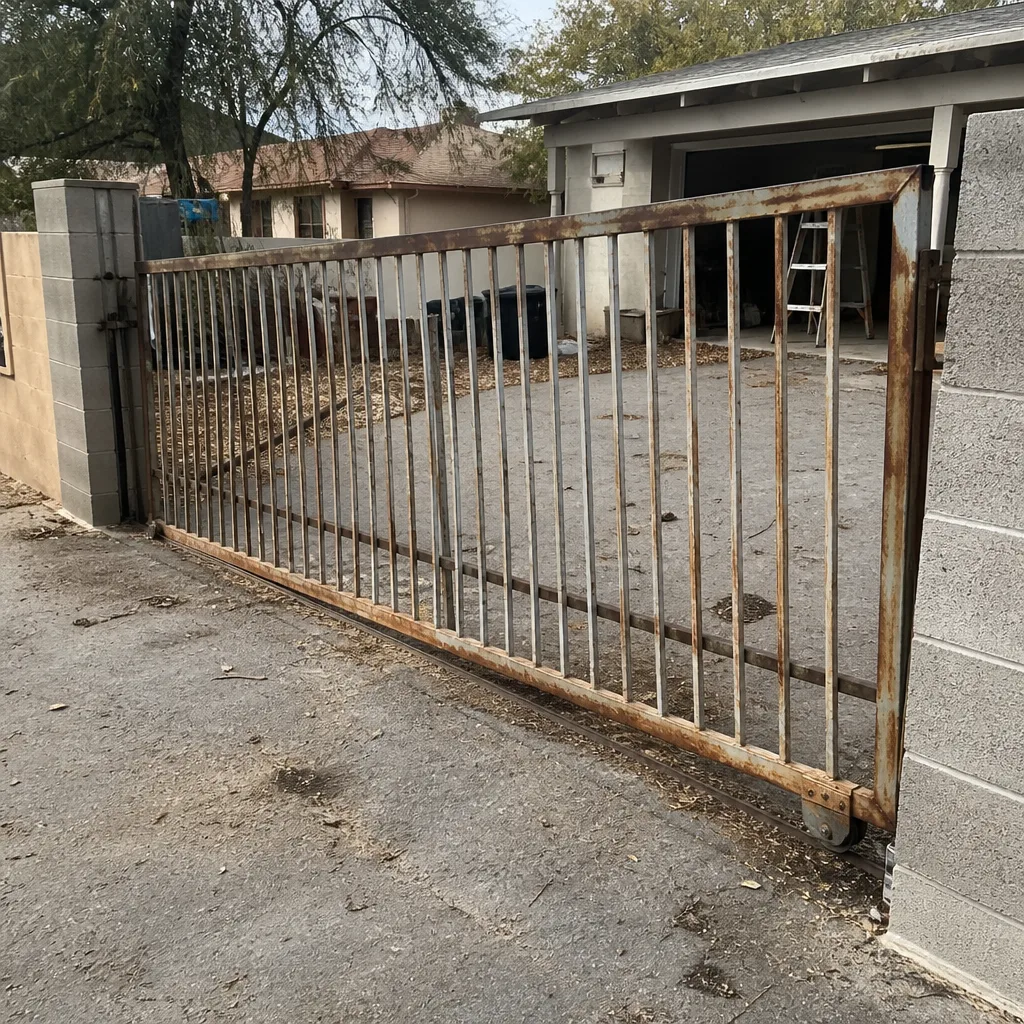 Before
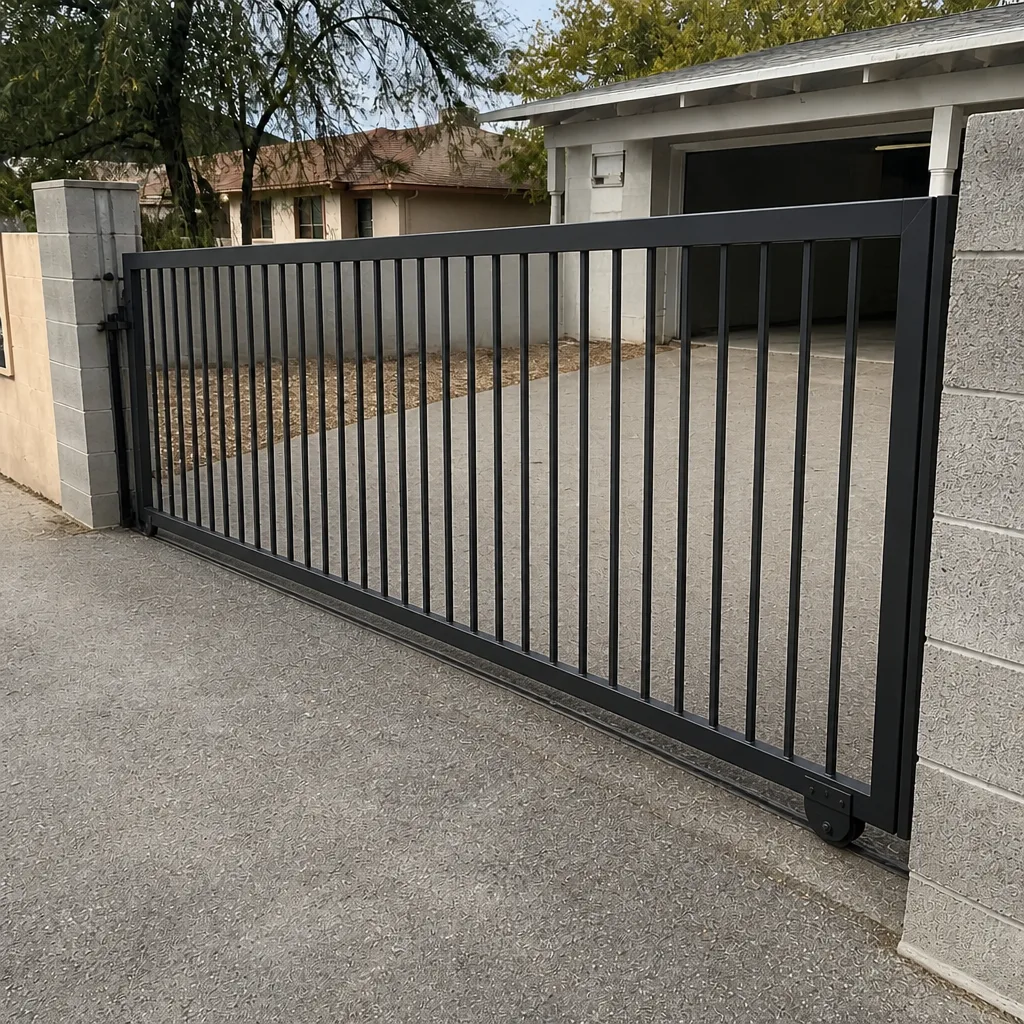 After
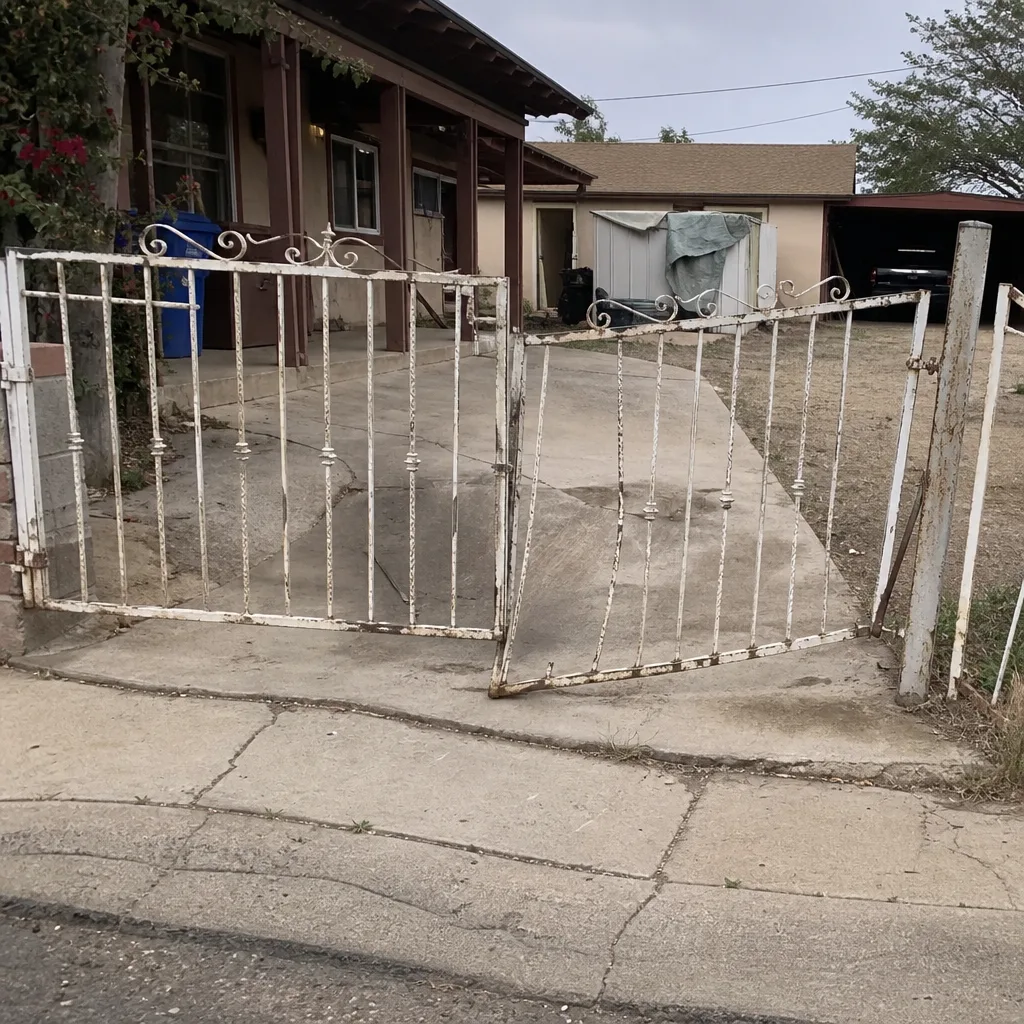 Before
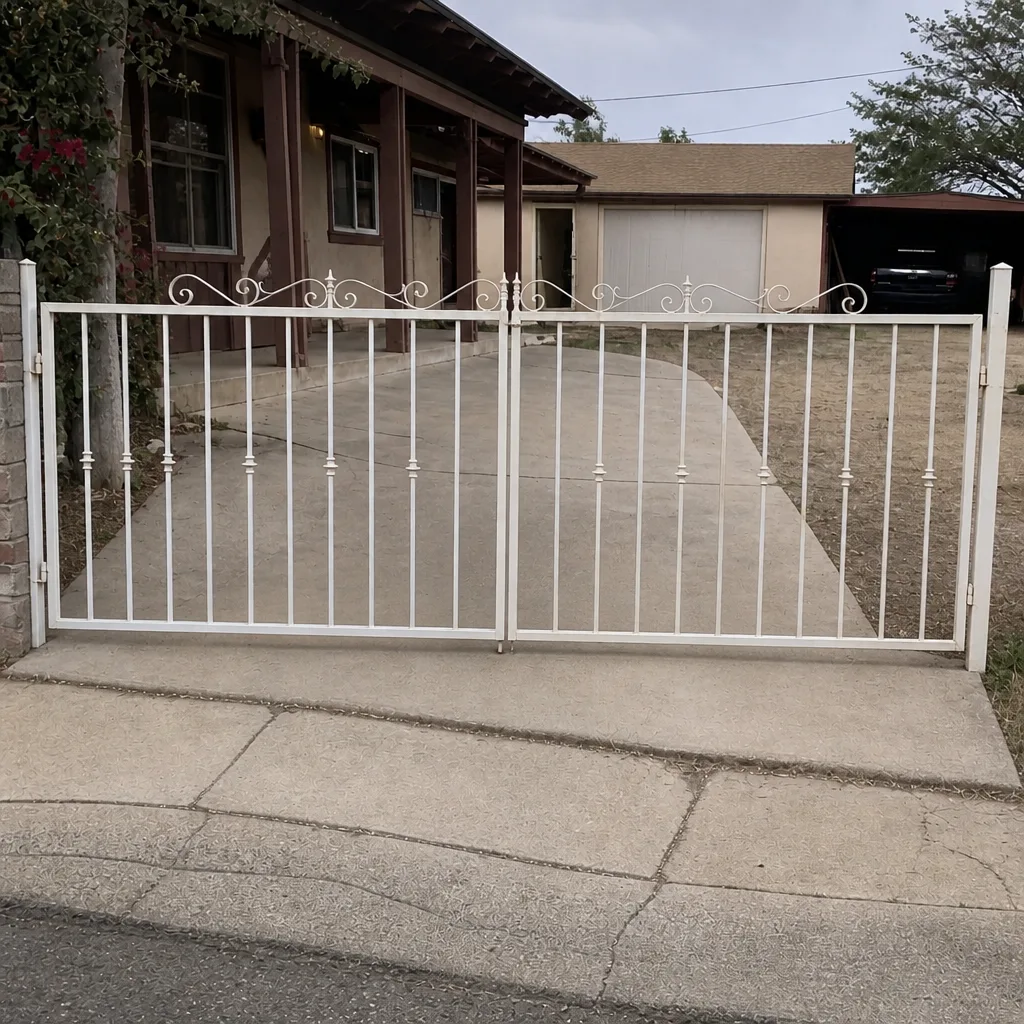 After
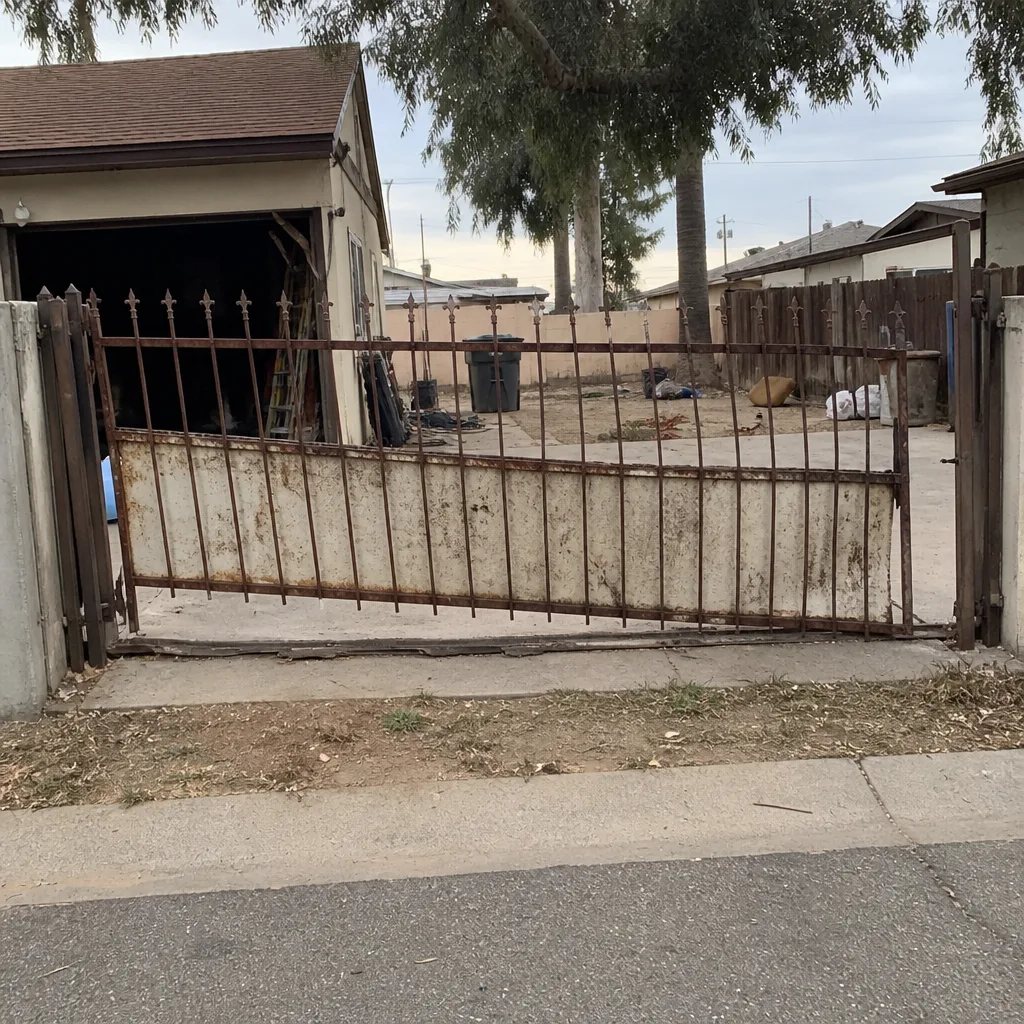 Before
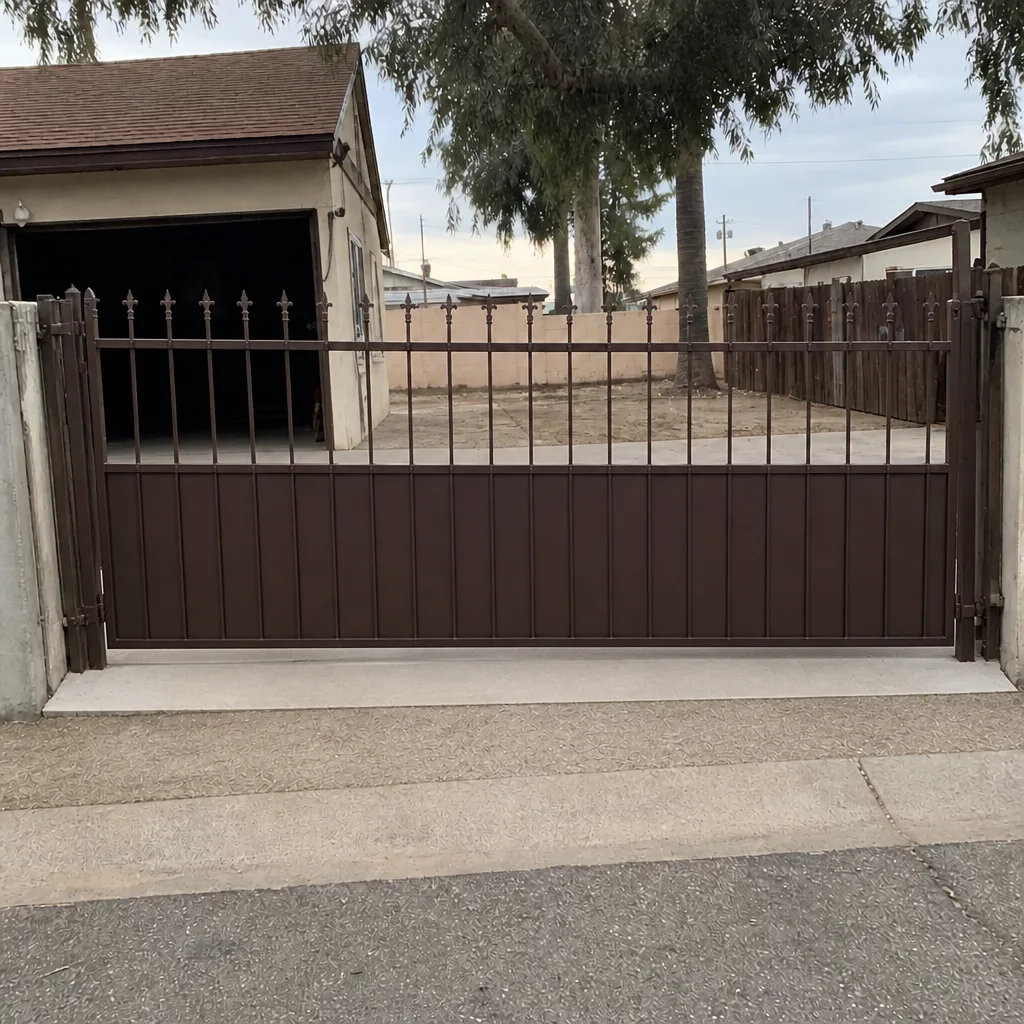 After
When to Call a Professional
Some maintenance is safe to do yourself: wiping photo-eye lenses, sweeping a track, logging what you see. But plenty of gate work crosses the line where a trained technician should step in. Call a professional if your photo-eyes keep false-triggering after cleaning, if the gate binds or drags when you push it by hand, if the operator cycles erratically, if a battery won’t hold a charge despite being properly tested, if the post has shifted or the gate has fallen out of alignment, or if a control board is throwing fault codes you can’t clear. Call us immediately if the gate is stuck open and security matters, or if a slide gate has come off its track.
On automated gates, the electrical side carries real risk. Control boards, wiring, and power runs should be handled by a trained technician. DIY repairs in an operator enclosure can cause shock injuries and can void safety features meant to protect people and vehicles. We can work on the system you already have, whether it’s a residential Mighty Mule, a LiftMaster, a commercial FAAC, or a BFT operator. Gate Repair Avondale offers free estimates in Avondale; call (866) 361-9597. We answer 24/7. Fast dispatch from 7am to 7pm, Sunday through Friday.
Frequently Asked Questions
Four checkpoints a year: winter, pre-summer, pre-monsoon, and post-storm. The standard “every six months” schedule is built for a milder climate and misses both the summer heat stress and the monsoon dust cycle. Each Avondale season attacks different components, so four events-based passes catch more than two calendar-based ones.
The most common cause is debris in the track or grit in the hinges and pivots, which then overloads the operator. If the gate fails after every storm, the safety sensor alignment or the mechanical condition needs an inspection, not just a cleaning. A technician can tell you whether the gate is telling you something about a real mechanical problem or whether the storm was a one-time event. Call (866) 361-9597 for a proper diagnosis.
Simulate a power loss with the gate in a safe, clear position and confirm it still cycles to a safe state. Do this in the pre-summer checkpoint, before triple-digit heat arrives. AGM batteries age fastest in sustained heat, so a battery that passed in spring may not carry through July. If it doesn’t hold up, replace it before summer rather than after a stranded gate.
Use a dry-film or graphite lubricant on pivots during the dusty and hot months, and a heavier grease only in cooler, lower-dust winter months. The problem with typical grease in summer is that it traps dust, which then grinds the hinge down faster than no lubrication at all. Keep it thin, and don’t over-apply.
Light tasks are fine: wiping photo-eye lenses, clearing a track, logging inspections, testing the battery. But anything involving the operator’s control board, wiring, power run, or a gate that has come off its track or fallen out of alignment should go to a technician. The electrical side carries real shock risk, and safety sensors need proper testing after any work.
Log the storm date, the type (haboob, heavy rain, wind), what you found on the inspection, and any behavior change in the operator or safety sensors. This tells a technician immediately whether a failure is storm-related or wear-related, which saves diagnostic time. If you need help deciding what’s a repair, call (866) 361-9597 and we’ll review your log with you.
The Bottom Line
An Avondale gate lives through heat, dust, and monsoon weather that a generic maintenance schedule was never built for. The right approach is four event-driven checkpoints: winter for deep mechanical repair, pre-summer for operators and battery backups, pre-monsoon for tracks and safety sensors, and a full post-haboob pass after every major storm. Choose lubricant by season and keep it thin in summer. Log everything so a technician can tell wear from a one-time event. Do the light tasks yourself, and hand off the electrical side, the alignment problems, and the operator faults to a trained technician.
If your gate needs repair, an electric gate repair visit, or a new installation, or if you want a professional to walk your maintenance schedule with you, get in touch. Gate Repair Avondale works on the brand you already have, from residential Mighty Mule and LiftMaster systems to commercial FAAC, BFT, and DoorKing access control. Nine brands, one call. Call (866) 361-9597 for a free estimate. We answer 24/7, with fast dispatch from 7am to 7pm, Sunday through Friday. Estimates are free, and the price is quoted and agreed before any work starts.
Written by the team at Gate Repair Avondale.