
Last updated November 15, 2026
 Wrought iron
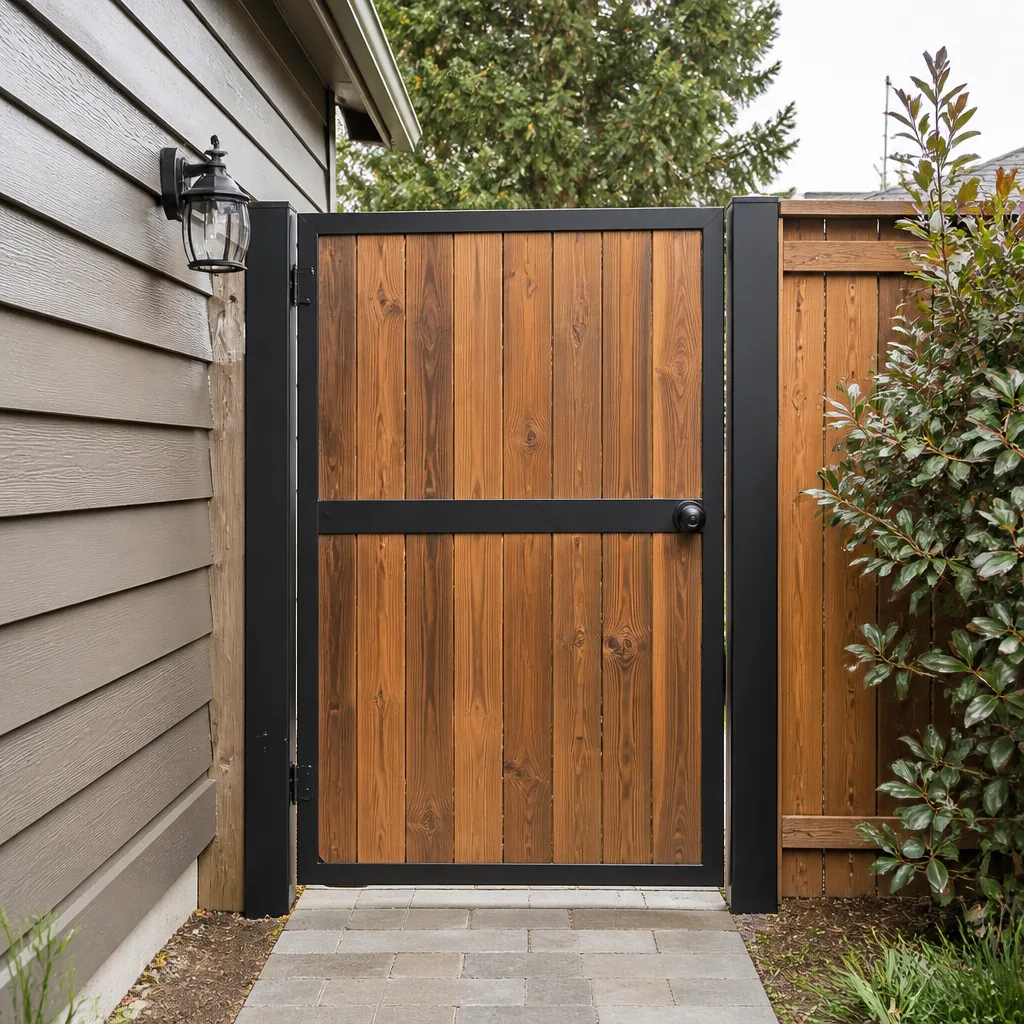 Wood & steel frame
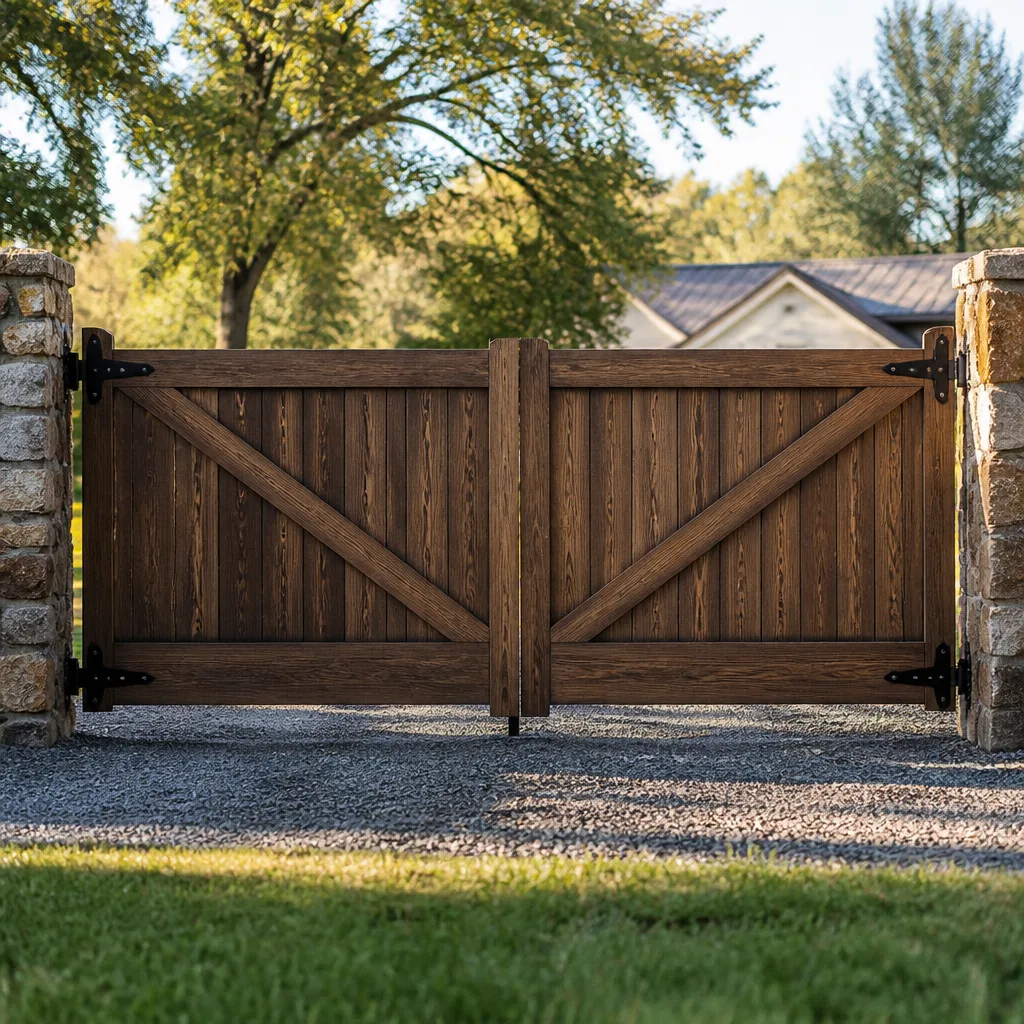 Farm & ranch
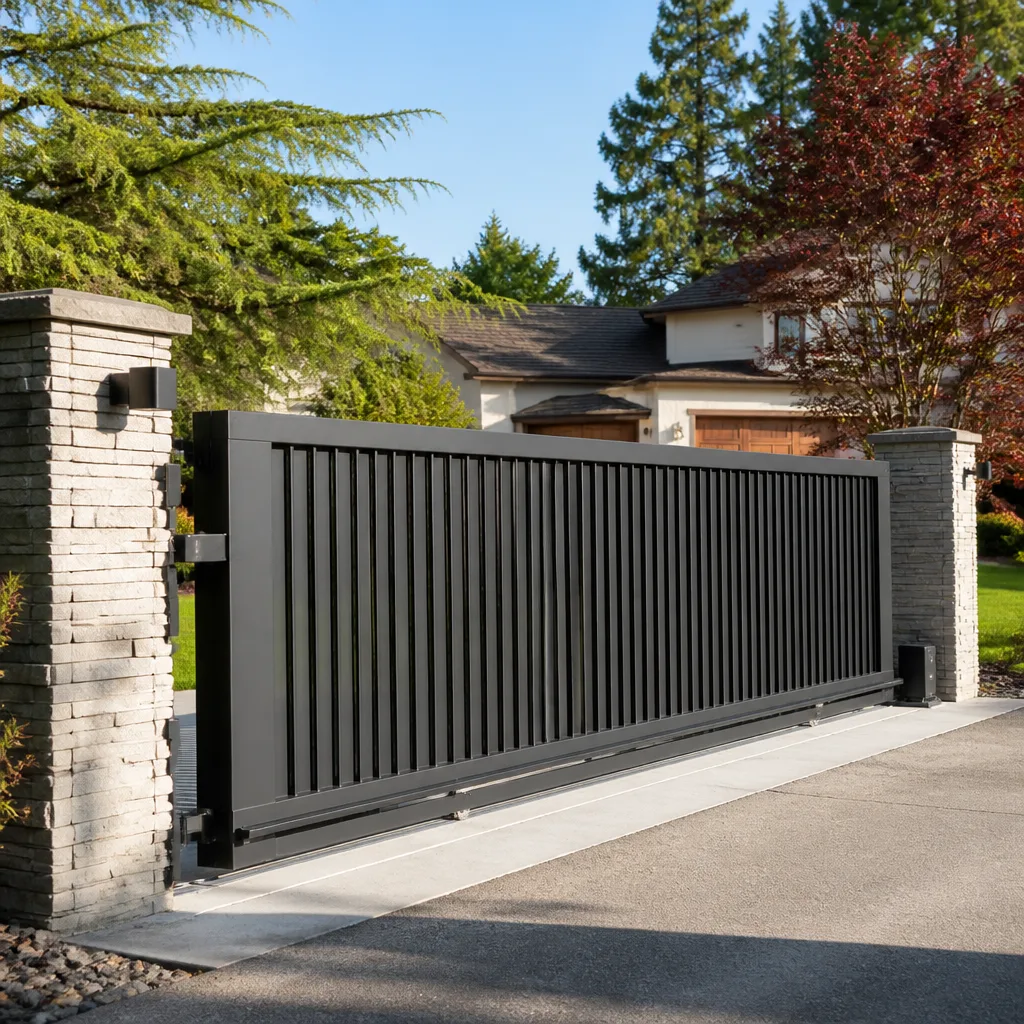 Sliding driveway gates
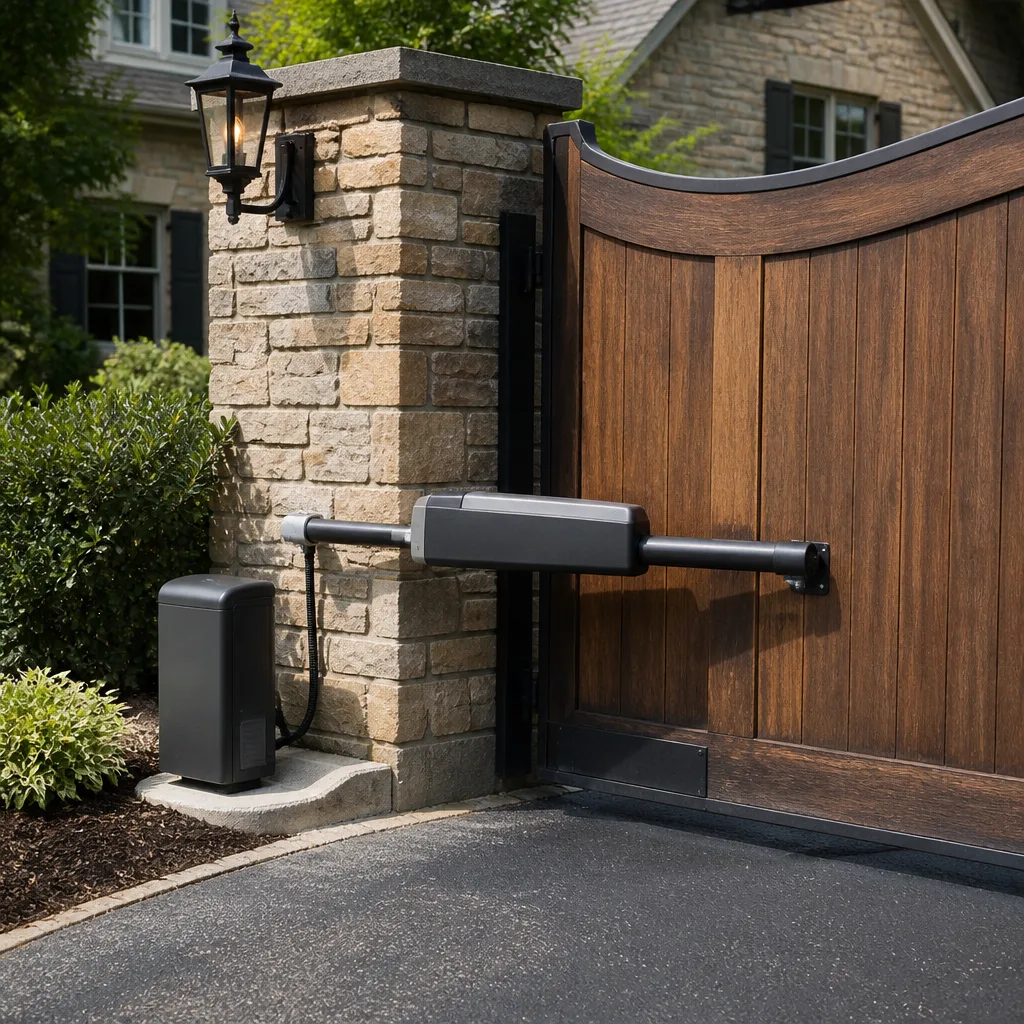 LiftMaster operators
Free on-site gate assessment - hinges, posts, and your LiftMaster or Nice gate operator checked before anything is quoted
The assessment is free and the quote is the invoice.
Get your free estimateGate Repair Warning Signs: An Avondale Homeowner’s Reference Guide
A gate that hesitates for two seconds before it moves isn’t “a little slow.” It’s an operator working at the edge of its torque limit, which puts a motor burnout weeks away, not years. The same pattern holds across almost every failure we diagnose in Avondale: the gate told the homeowner something was wrong long before it stopped working, and none of those signals looked urgent at the time.
This guide translates the sounds, movements, and visual cues your gate is already giving you into plain language about what’s happening mechanically and how much runway you have. By the end you’ll know which symptoms mean watch it, which mean schedule a repair, and which mean the gate could fail in a way that traps a vehicle or hurts someone.
Quick Answer
The most serious gate warning signs in Avondale are grinding or humming from the operator, a gate that sags at the latch side, a panel that reverses inconsistently, and visible rust or cracking at weld points. Sounds point to a failing component you can hear before you can see it, while movement changes and structural symptoms usually indicate wear that will worsen until an adjustment or part replacement is done.
Styles & brands we work with
- Wrought iron
- Wood & steel frame
- Farm & ranch
- Sliding driveway gates
- LiftMaster operators
Table of Contents
- What Is Your Gate Telling You? Diagnosing Gate Problems by Sound
- Movement Symptoms: Sagging, Reversing, Stuttering, and Drifting
- Visual Warning Signs Homeowners Walk Past Every Day
- The Urgency Triage: Months, Weeks, or Right Now
- Warning Signs Specific to Electric Operators
- Error Code Behaviors on Common Systems
- When to Call a Professional
- Frequently Asked Questions
What Is Your Gate Telling You? Diagnosing Gate Problems by Sound
Sound is the fastest diagnostic tool a gate gives you, and most homeowners dismiss it as “the gate being loud.” Each distinct noise points to a different component. Learning to tell them apart is the single most useful thing you can do for the long-term health of the system.
Grinding usually means metal-on-metal contact – a worn roller, a track with debris packed into it, or a hinge pin that has lost its lubrication and is now scraping. On sliding gates the grind is almost always at the track or roller carriage. On swing gates, it’s at the hinges. Grinding doesn’t fix itself, and continued operation accelerates wear on the parts around it.
Clicking suggests something is loose or repeating a single failed action. A relay inside the control board cycling, a limit switch not being fully tripped, or a chain slipping a tooth. Clicking that happens once per cycle is usually a limit or sensor adjustment. Clicking that repeats rapidly during a single cycle points at the board or the motor’s internal gearing.
Humming without movement is one of the more serious sounds. The motor is receiving power and trying to turn, but the gate isn’t moving – a jammed roller, a seized motor bearing, a stripped gear, or an obstruction. A motor run in this condition heats up quickly. If you hear humming that doesn’t result in movement, stop cycling the gate and have it looked at before the motor or board fails outright.
Squealing tends to be a bearing at the end of its life or a dry pivot point. It’s often the most benign of the four, but only if it’s addressed. A squeal left alone turns into a grind, and a grind left alone turns into a seized component.
In Avondale, we hear these sounds change seasonally. The dry summer heat bakes lubrication out of hinge pins and roller bearings faster than in cooler climates, so a squeal that appears in June is often a gate that was fine in February. Pay attention to when a sound started – if it lines up with the heat arriving, that’s your first clue.
Movement Symptoms: Sagging, Reversing, Stuttering, and Drifting
How the gate moves tells you about the system’s condition just as clearly as sound does. Each movement symptom maps to a specific class of failure.
Sagging at the latch side – the free end of a swing gate – usually indicates post settling, worn hinges, or both. As the gate sags, the latch no longer aligns, the operator has to push uphill, and the entire system works harder. In Avondale’s soil conditions, post settling is a common driver of gate sag, especially on older installations where footings weren’t driven deep enough.
Reversing mid-travel is nearly always a safety system doing its job. Photo eyes, loop detectors, and edge sensors trigger a reversal when they detect something in the path – but if the gate reverses with nothing in the way, the sensor is misaligned, dirty, failing, or the control board is misreading it. Never disable a safety sensor to “fix” a reversing gate. That reversal is the last line of defense against a serious injury.
Stuttering – the gate moves in little jumps rather than smoothly – points to a power supply problem, a worn drive mechanism, or a mechanical bind. On sliding gates, it’s often a roller carriage that’s lost a wheel. On swing gates, it’s a hinge or a gearbox. Stuttering is a sign the system is fighting itself, and continued use wears everything faster.
Drifting – the gate moves when it shouldn’t, or doesn’t stay where it was told – is a brake or control issue. An electric operator with a failing brake can drift after it closes, which defeats the security purpose of the whole assembly.
Partial operation – the gate opens partway and stops, or closes but doesn’t open, or vice versa – is often a limit switch that’s no longer set correctly, or a control board that’s not receiving feedback from the motor.
If your gate is showing any of these movement symptoms, our gate repair team can diagnose the specific cause on-site rather than guessing at the fix.
Visual Warning Signs Homeowners Walk Past Every Day
Visual symptoms are the ones most often missed, because they develop slowly and the gate still works. That’s exactly why they matter – they’re the ones you can act on before the gate stops working.
- Rust patterns. Surface rust on a panel is cosmetic. Rust along a weld seam, at a foot plate, or creeping out from behind a hinge is structural. In Avondale, monsoon moisture plus dry-season dust creates a rust pattern that often hides at the bottom of the gate and inside the frame corners.
- Gap inconsistencies. The gap between the gate panel and the post, or between two meeting panels, should be consistent. A gap that’s wider at the top than the bottom means the post has moved or the panel has warped. A gap that changes with the seasons means the frame is flexing.
- Worn rollers. Rollers develop flat spots before they fail completely – visible if you watch the gate in motion or roll it by hand. A flattened roller thumps every rotation, which you’ll hear before you see.
- Cracked weld points. Look at every hinge attachment, gusset, and corner weld. A hairline crack at a stress point is a structural warning that the panel could fail under load.
- Loose fasteners. Bolts that hold hinges, brackets, and operator arms should be tight. Repeated loosening means the hole is wallowed or the fastener is under-spec for the load.
- Bent track sections. On sliding gates, look down the length of the track. Any bend, dip, or twist will grab the rollers and can pitch the gate off its carriage.
None of these require a call the moment you spot them, but two or more together usually mean the gate is closer to a repair than it looks.
The Urgency Triage: Months, Weeks, or Right Now
Not every symptom is urgent, but every symptom is telling you something. This triage framework sorts the warning signs into three groups – which ones give you a few months, which give you a few weeks, and which mean the gate could fail in a way that traps a vehicle or injures someone.
Months of runway (schedule a service visit when convenient):
- Squealing or squeaking that resolves if you lubricate the pivot.
- Cosmetic surface rust without a structural pattern.
- Gap changes of less than a quarter inch, with the gate still operating smoothly.
- A single loose fastener that tightens and stays tight.
Weeks of runway (schedule within the next few weeks):
- Grinding at a roller, hinge, or track.
- Visible sag at the latch side, with the gate still operating.
- Stuttering movement that worsens under load or in heat.
- Worn rollers with flat spots, or a limit switch behaving inconsistently.
- Cracked weld at a hinge or stress point.
Right now (stop using the gate, call for same-day service):
- Humming without movement – the motor is straining and can burn out or overheat.
- Reversing mid-travel with nothing in the path – the gate may misinterpret obstruction and behave unpredictably around vehicles or pedestrians.
- Cracked weld at a primary structural point, or a gate that has come off its track or carriage.
- Loop detector or safety sensor fault that isn’t clearing.
- Any sign a heavy panel is loose from a hinge or operator arm.
If you’re not sure which group a symptom belongs to, that’s exactly the conversation to have on the phone. Call (866) 361-9597. We answer 24/7. Fast dispatch from 7am to 7pm, Sunday through Friday.
Warning Signs Specific to Electric Operators
Automated gates show a different set of warning signs than manual ones, because the operator adds an electrical system between you and the mechanical gate. A manual gate that sags gets heavy. An electric gate that sags starts straining its operator – and the operator often fails first.
Here’s what to watch on an electric system:
- Longer and longer opening times. An operator that’s gotten slower usually means it’s fighting mechanical resistance. The motor torque hasn’t changed; the gate has.
- Random stops mid-travel. Often a limit switch losing its position, or a control board misreading its own feedback.
- Remote requiring multiple presses. Remote batteries fail first, but if a fresh battery doesn’t fix it, the receiver or the board is losing sensitivity.
- Safety sensor trips without obstruction. Photo-eyes get dust-covered in Avondale faster than most homeowners expect, and sun at certain angles can trip them too. Clean them first, then call if the problem persists.
- Loop detector “ghost” triggers. A vehicle loop that fires with no vehicle over it usually means the loop wire has moved, broken, or shorted.
- Intermittent operation that correlates with heat. Avondale summers push operator motors, control boards, and batteries harder than moderate climates. A board that works in the morning and fails by afternoon in July is telling you something has drifted out of spec.
We work on the brand you already have – LiftMaster, FAAC, DoorKing, and others across a nine-brand roster that also includes BFT, Linear, Viking, Ghost Controls, Elite, and Mighty Mule. That matters for electric operator diagnosis because the behavior of a fault often depends on the manufacturer’s design. Our electric gate repair specialists know how each brand fails, which is faster than diagnosing from scratch.
Error Code Behaviors on Common Systems
Error codes on an automated gate operator are helpful, but the pattern matters more than the specific code. Three general behaviors cover most of what you’ll see:
A code that appears once and clears is often a transient fault – a voltage dip, a sensor that got a leaf across it once, or a limit switch that paused at a bad spot. If the gate behaves normally afterward, don’t panic. Note what happened and watch for it again.
A code that repeats on every cycle is a consistent fault – a sensor that’s misaligned, a limit switch no longer reading correctly, an encoder losing its position. This won’t clear on its own, and continued cycling can worsen the component behind it.
A code that appears most forcefully in heat is usually a board or motor fault that worsens with temperature. On LiftMaster residential operators and DoorKing commercial systems alike, control boards that drift when hot will eventually fail outright.
On FAAC and DoorKing systems specifically – often the operators we see on managed-entry and multi-tenant installations in Avondale – some faults show as “won’t cycle at all” rather than a visible code, and the diagnostic path runs through the safety loop rather than the motor. That’s why knowing the brand on-site before arrival matters. It’s the difference between one visit to diagnose and several to sort out.
We can also work with your insurer if an incident damaged the operator or gate, and we’ll always tell you plainly what failed and what the fix involves before any work begins.
See the difference
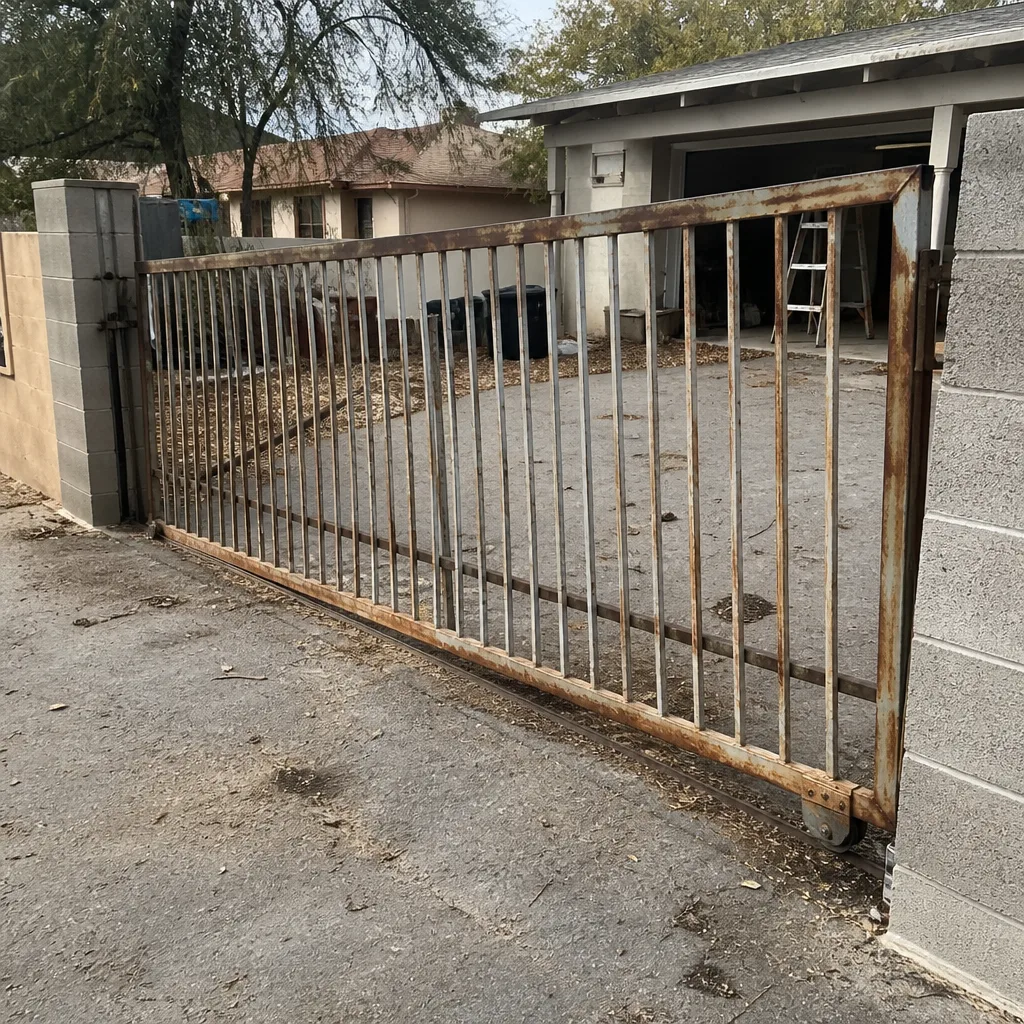 Before
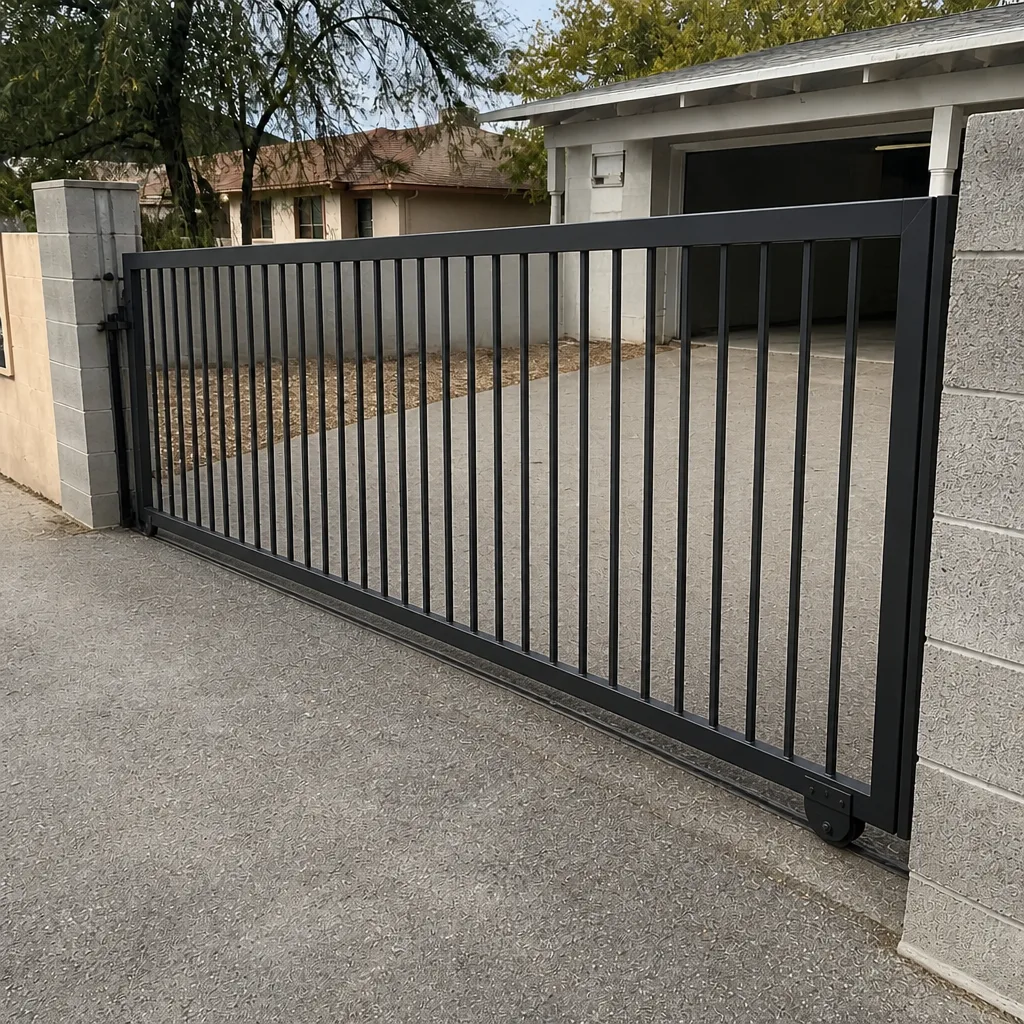 After
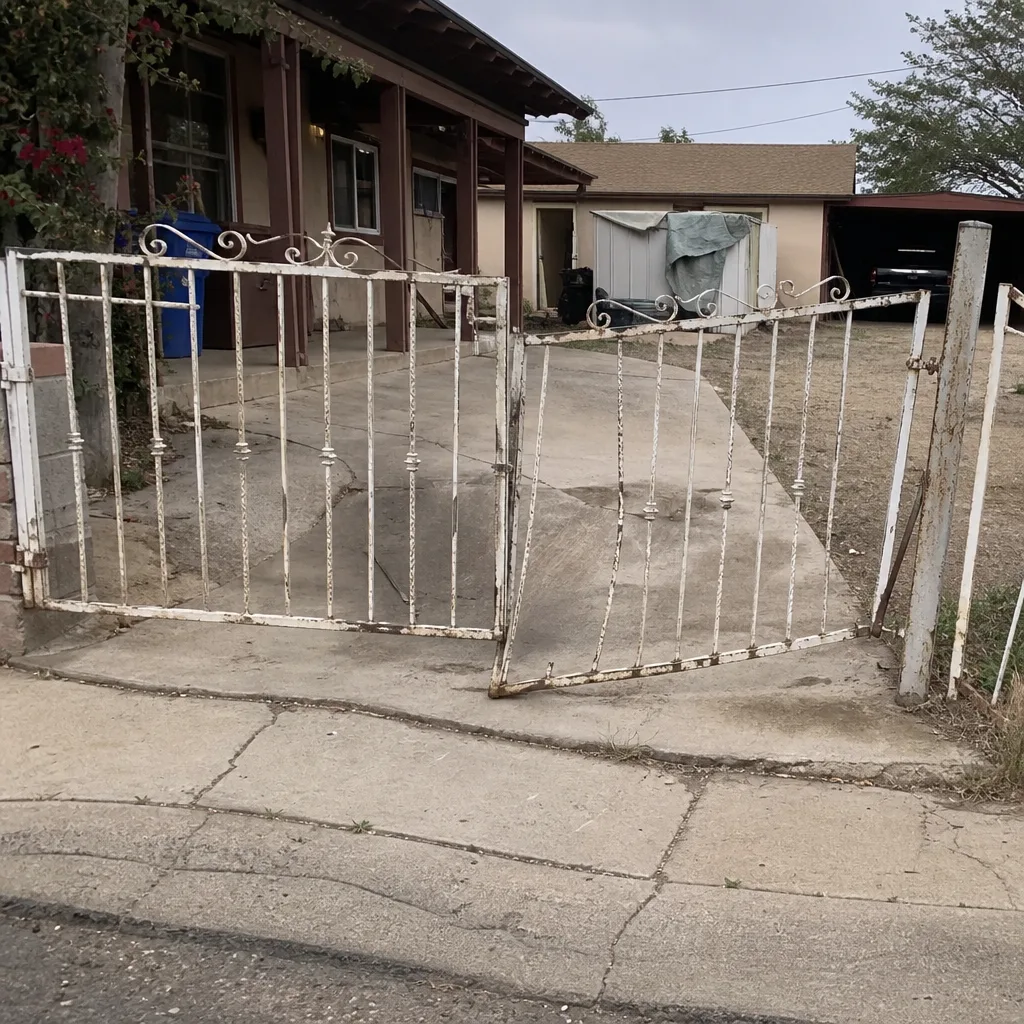 Before
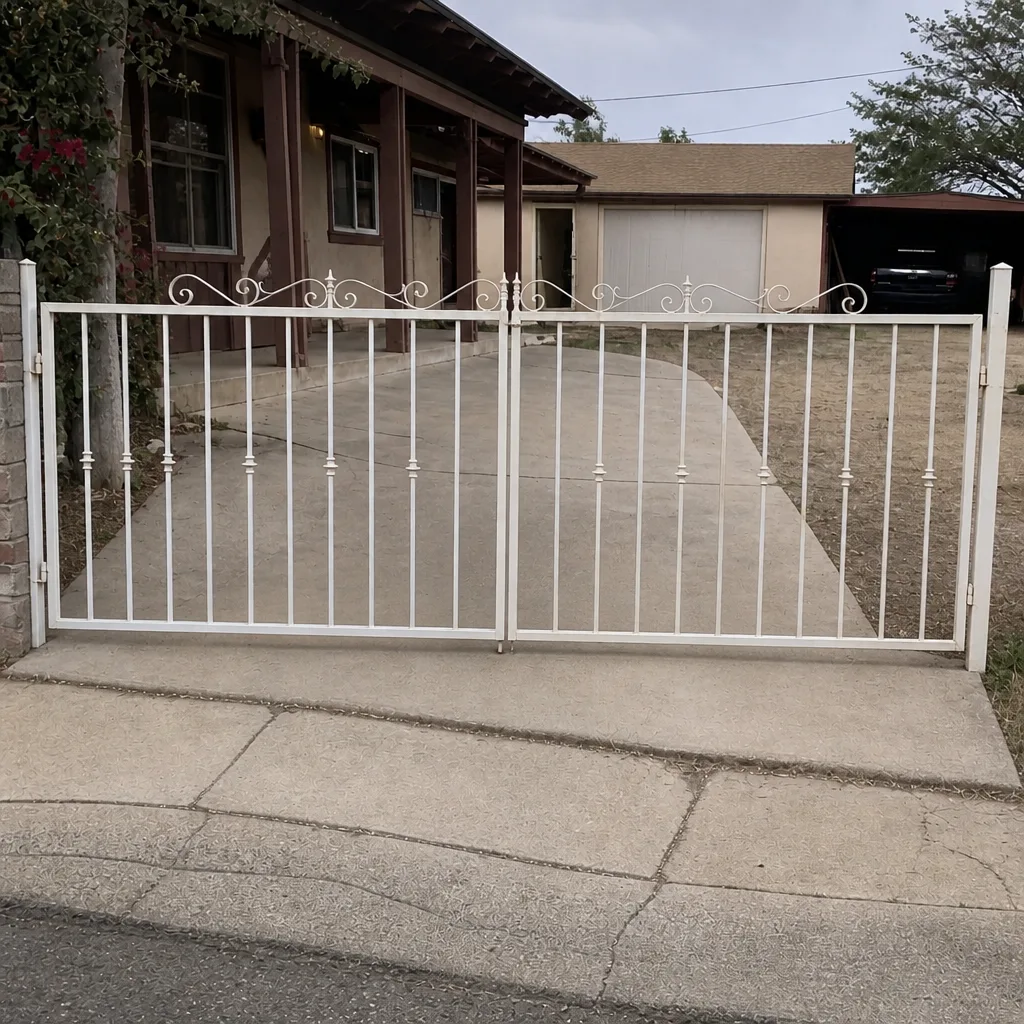 After
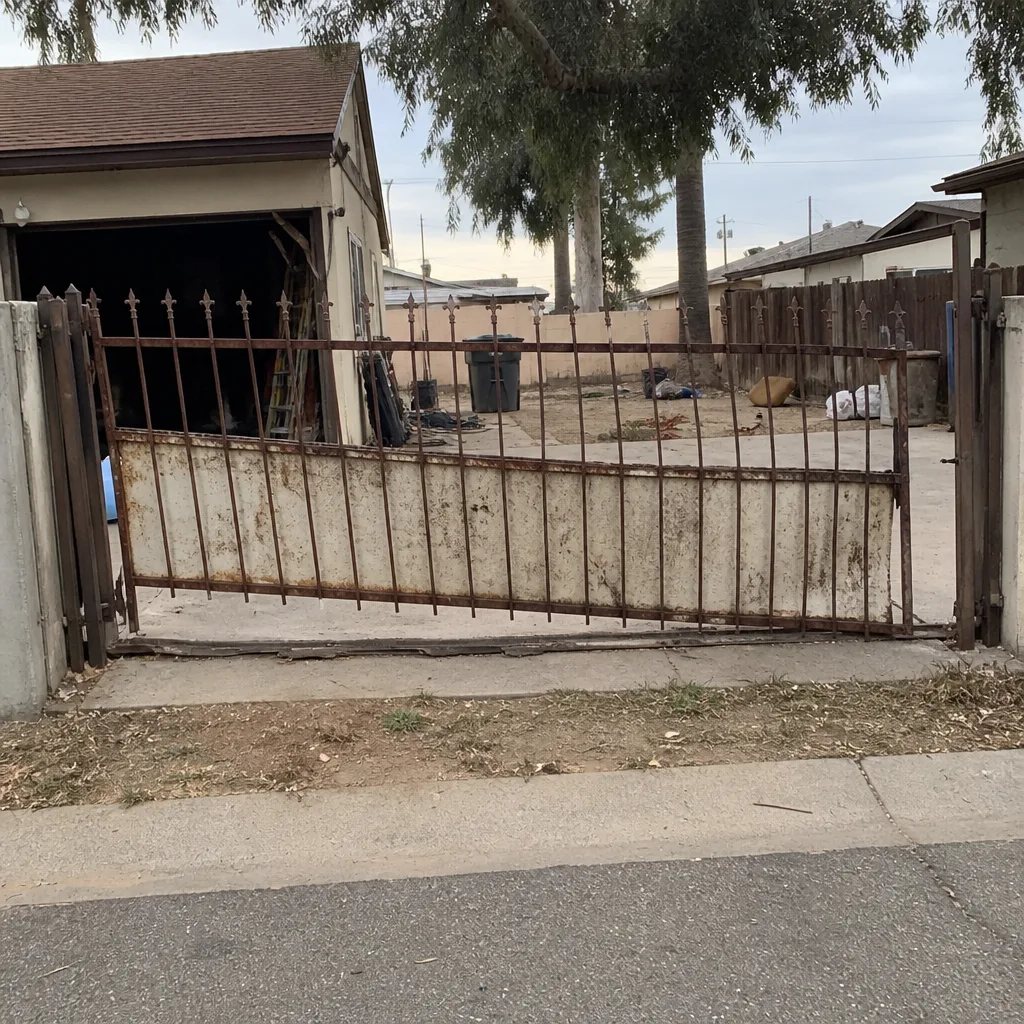 Before
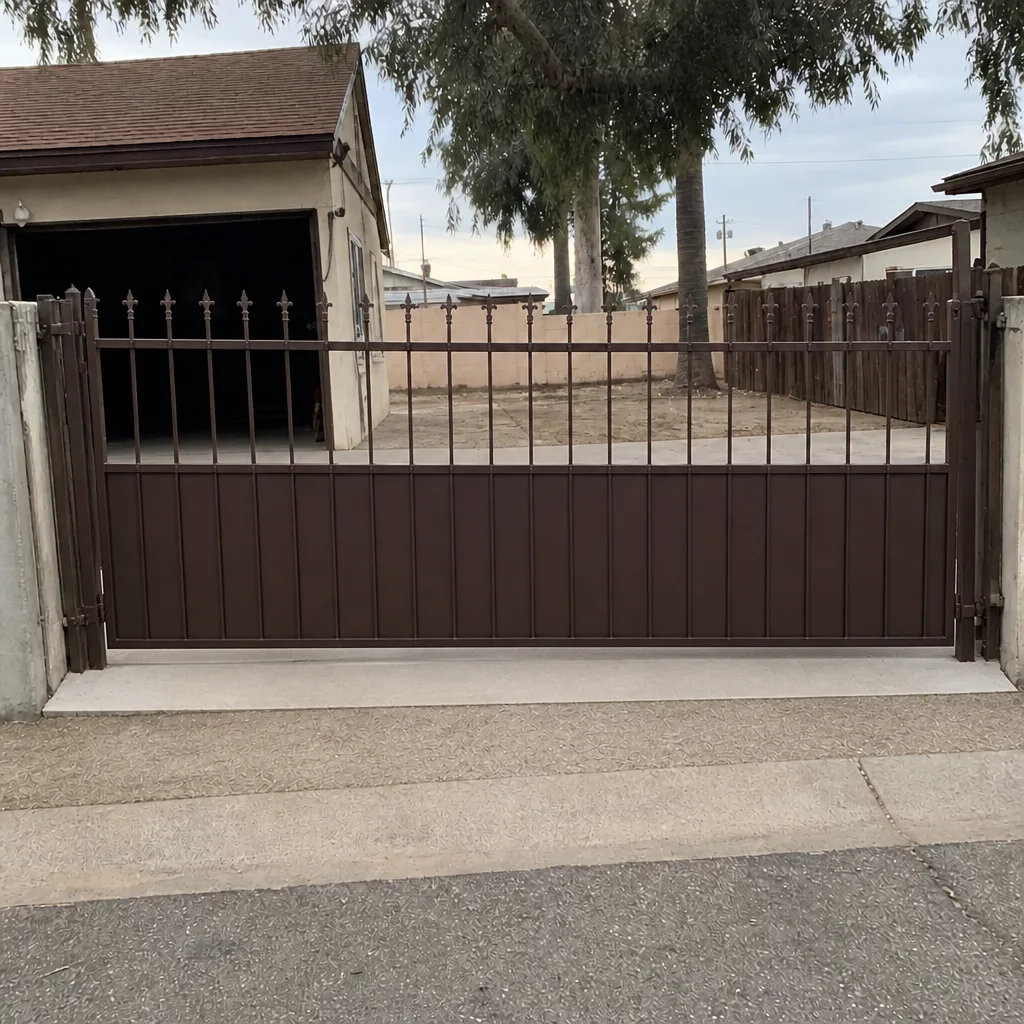 After
Common Mistakes to Avoid
- Greasing the track instead of the rollers. Grease on an exposed track collects Avondale dust and turns into grinding paste. The correct spots are the roller bearings and hinges, and the track itself should be clean and dry.
- Turning up the operator’s sensitivity or force setting. This “fixes” a straining gate by letting the motor push harder, which burns it out faster and disables part of the safety system. Force settings should be set by a technician to the gate’s actual requirements.
- Disabling a safety sensor “just for a few days.” A gate that reverses is trying to tell you something – the sensor is doing its job. A disabled sensor turns a near-miss into an injury, especially around children and pets.
- Watching the gate work and calling it “fine.” A gate that runs but has a cracked weld, a sagging latch, or grinding rollers is on a timer. Operators and panels fail on their own schedules, and a working gate can still be weeks from a failure.
- Calling a general handyman for an electric operator problem. Control boards, loop detectors, and intercom wiring aren’t general repair work. The wrong diagnosis is a wasted visit and a repeat failure.
- Ignoring heat-correlated symptoms in Avondale summer. A gate that hesitates in July but runs fine in January is not fixed. It’s showing you a component that’s drifted toward failure and cooling down at night.
- Not checking the gate’s post footing after a monsoon. Heavy rain in Avondale can shift soil around a post. If the gate suddenly aligns differently after a storm, look at the footing before assuming the hinges failed.
When to Call a Professional
Call a professional if the gate hums without moving, reverses with nothing in the path, has a cracked weld at a hinge or stress point, or has come off its track. Call if the operator shows a repeating error code, if the gate has changed how it moves over weeks rather than days, or if any panel feels loose. Call if a safety sensor trips repeatedly and cleaning hasn’t solved it. None of these are “watch it for a while” situations, because each one is on a path toward a bigger failure.
For an on-site look, Gate Repair Avondale offers free estimates in Avondale – call (866) 361-9597. Our technicians have up to 12 years of experience across residential and commercial gates, and we’re happy to walk through what you’re seeing before deciding whether a repair is needed now or can wait.
Frequently Asked Questions
Grinding is serious enough to schedule service within the next few weeks, because metal-on-metal contact always means parts are wearing against each other. On a sliding gate the cause is usually the track, a roller, or the carriage; on a swing gate it’s the hinges or pivot pins. Left alone, grinding wears the surrounding components faster, so what you caught early becomes a bigger job. Call (866) 361-9597 for a free estimate – estimates are free and we’ll tell you what’s actually failing.
A gate that reverses with nothing in the path means the safety system is misreading a clear path – usually a dirty or misaligned photo-eye, a loop detector fault, or a control board misreading its own sensors. This is the most urgent category of electrical warning sign in Avondale, because the gate may behave unpredictably near vehicles or people. Don’t disable the sensor. Call (866) 361-9597 and we’ll look at it same-day in most cases.
No. A sagging swing gate is caused by worn hinges, a settling post, or both, and which one dominates determines the correct fix. In Avondale, where soil conditions can shift post footings over time, the post is often involved even when the hinges look fine. A sagging gate loads the operator harder and stresses the latch, so scheduling a diagnostic before it gets worse usually saves money. Call (866) 361-9597 for an on-site estimate.
Heat-correlated failures almost always point at a control board, a motor that’s depleted its thermal margin, or a battery losing capacity under load. Avondale summer afternoons push the entire system harder than mornings, which exposes components that have drifted out of spec. The gate isn’t “working fine” – it’s working at the edge. Call (866) 361-9597 and mention the timing – it shortens the diagnosis.
You can’t change the climate, but you can make sure the operator isn’t working harder than it should be. Mechanical problems – sagging, worn rollers, misaligned tracks – force the motor to strain, and heat is what turns that strain into a failure. Fix the mechanical side and the operator handles heat far better. Our electric gate repair team handles the full system from the motor to the panel. Call (866) 361-9597 for an exact quote.
We work on the brand you already have across LiftMaster, FAAC, BFT, Linear, Viking, Ghost Controls, DoorKing, Elite, and Mighty Mule. That nine-brand roster covers most residential and commercial installations in Avondale, from a backyard swing gate to a managed-access commercial entry. Mention the brand when you call so we can prepare the right diagnostic path. Call (866) 361-9597. We answer 24/7. Fast dispatch from 7am to 7pm, Sunday through Friday.
The Bottom Line
Every gate failure we see started as a warning sign the homeowner had already noticed. Sound comes first – grinding, clicking, humming, or squealing each points to a different component. Movement comes second – sagging, reversing, stuttering, drifting, and partial operation each tell you what class of failure is developing. Visual symptoms come third and are the ones most often walked past: rust patterns, gap changes, worn rollers, cracked welds, and bent tracks.
The urgency triage is the takeaway: months for cosmetic issues, weeks for grinding and sagging, right now for humming without movement, unbidden reversing, structural cracks, and panels off their tracks. For residents in Avondale, our team is ready to look at any of these warning signs and give you a straight answer. Call (866) 361-9597. We answer 24/7. Fast dispatch from 7am to 7pm, Sunday through Friday. Free estimates across Avondale, and the written estimate sets the final price before any work starts.
Written by the team at Gate Repair Avondale.