
Last updated November 15, 2026
 Wrought iron
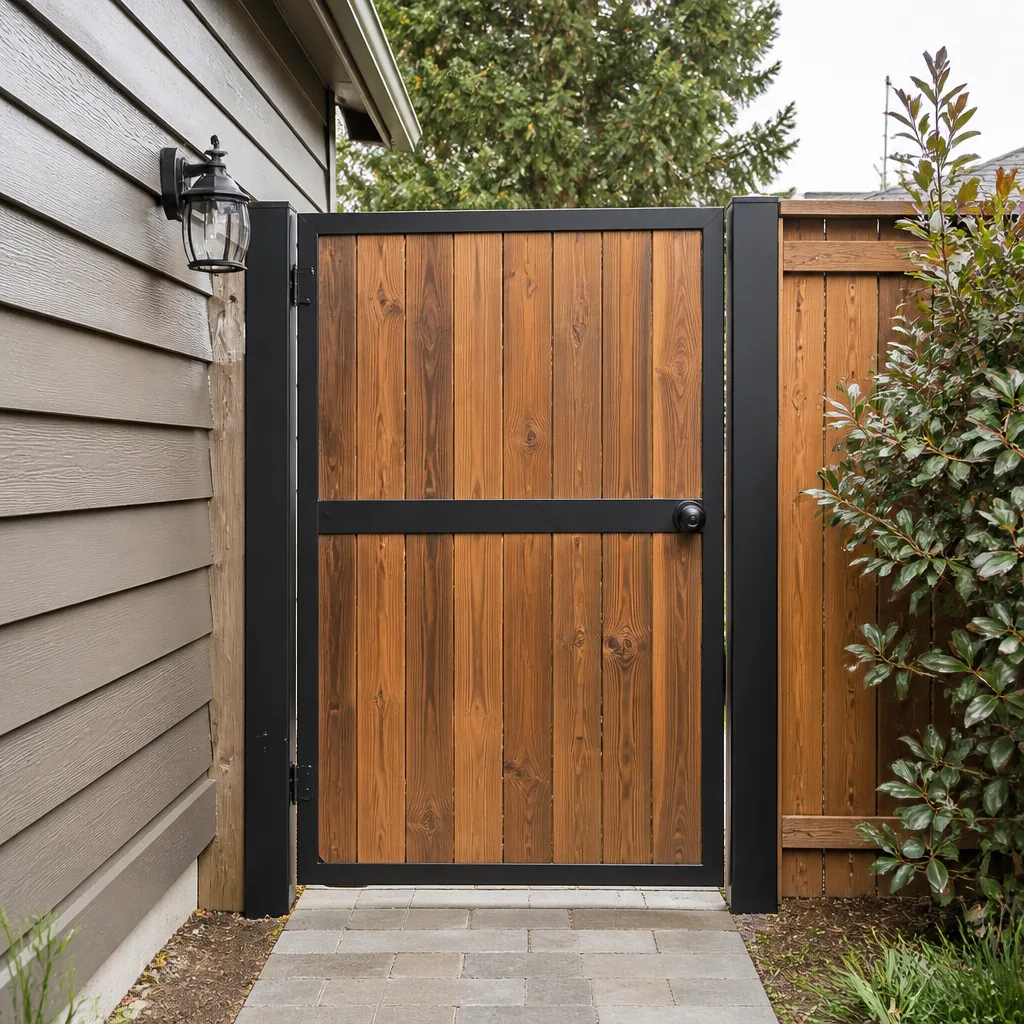 Wood & steel frame
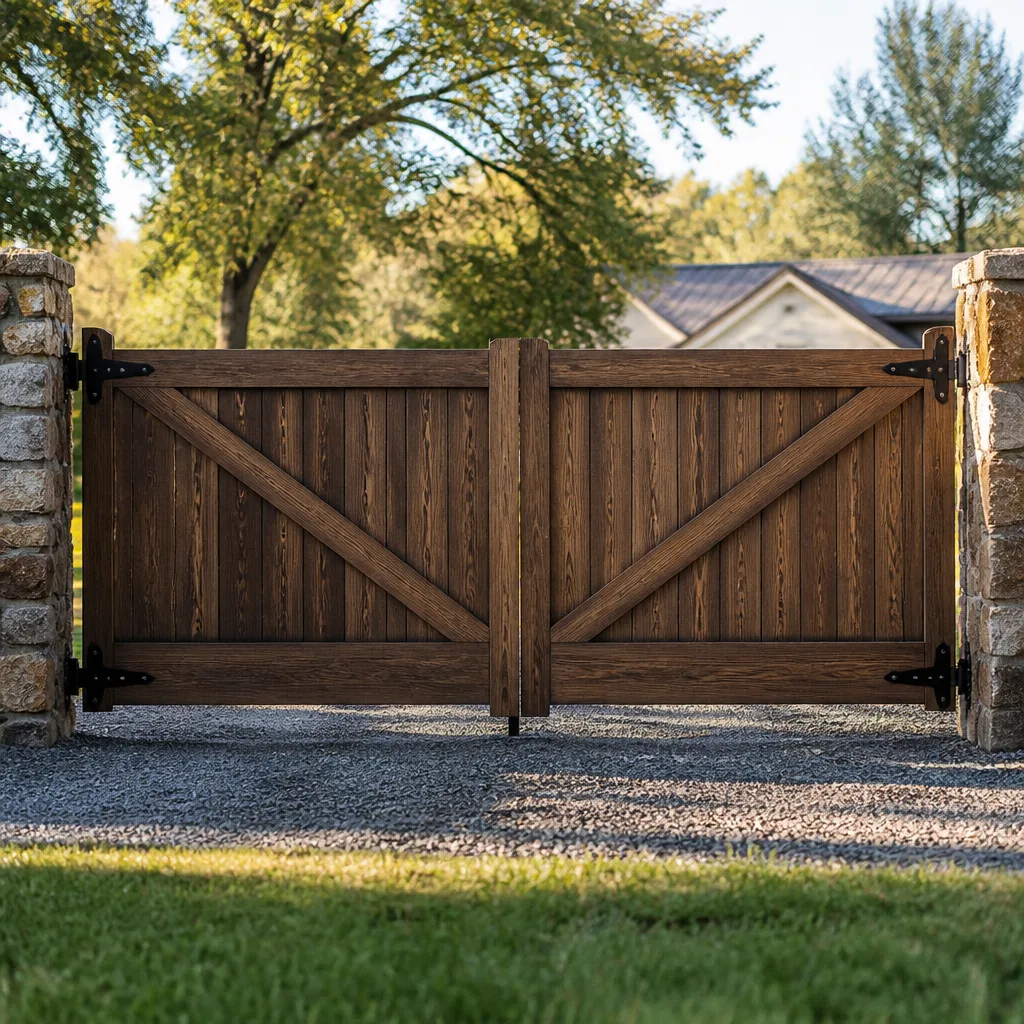 Farm & ranch
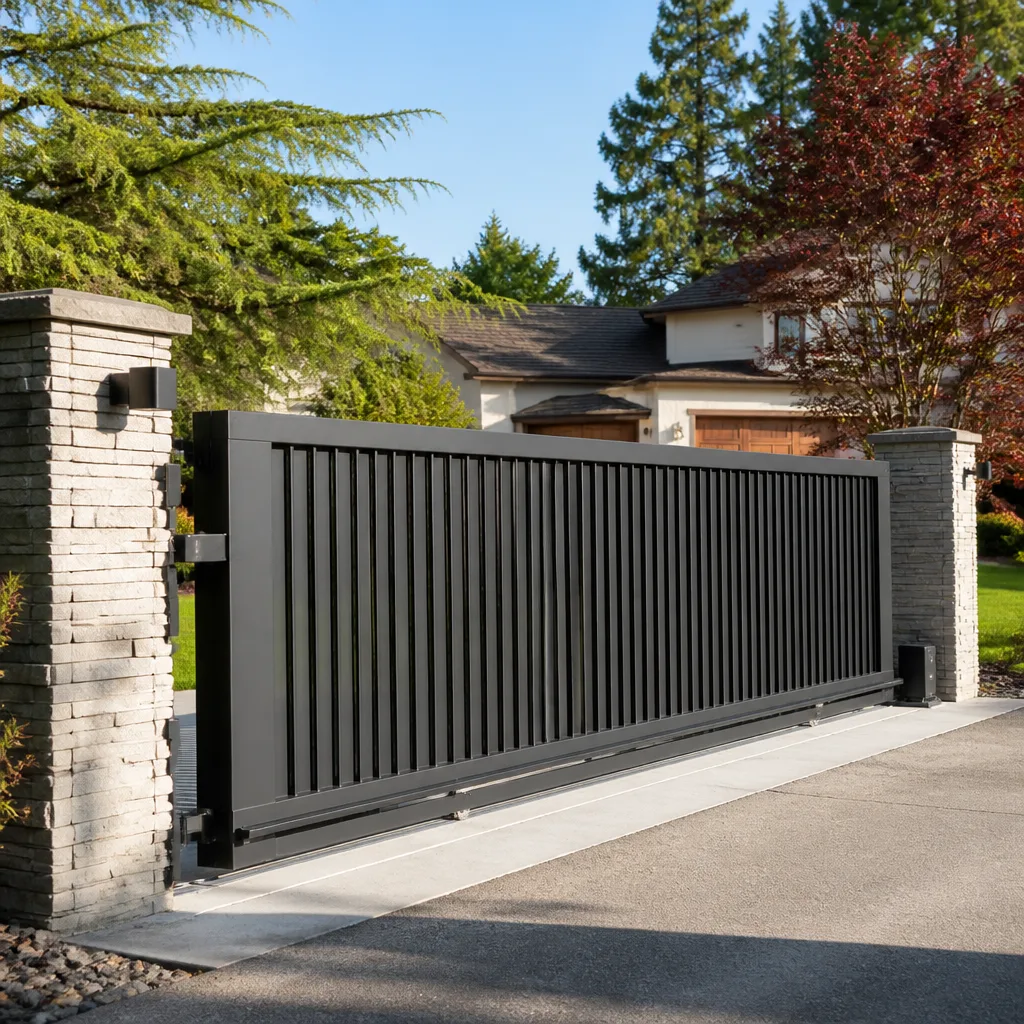 Sliding driveway gates
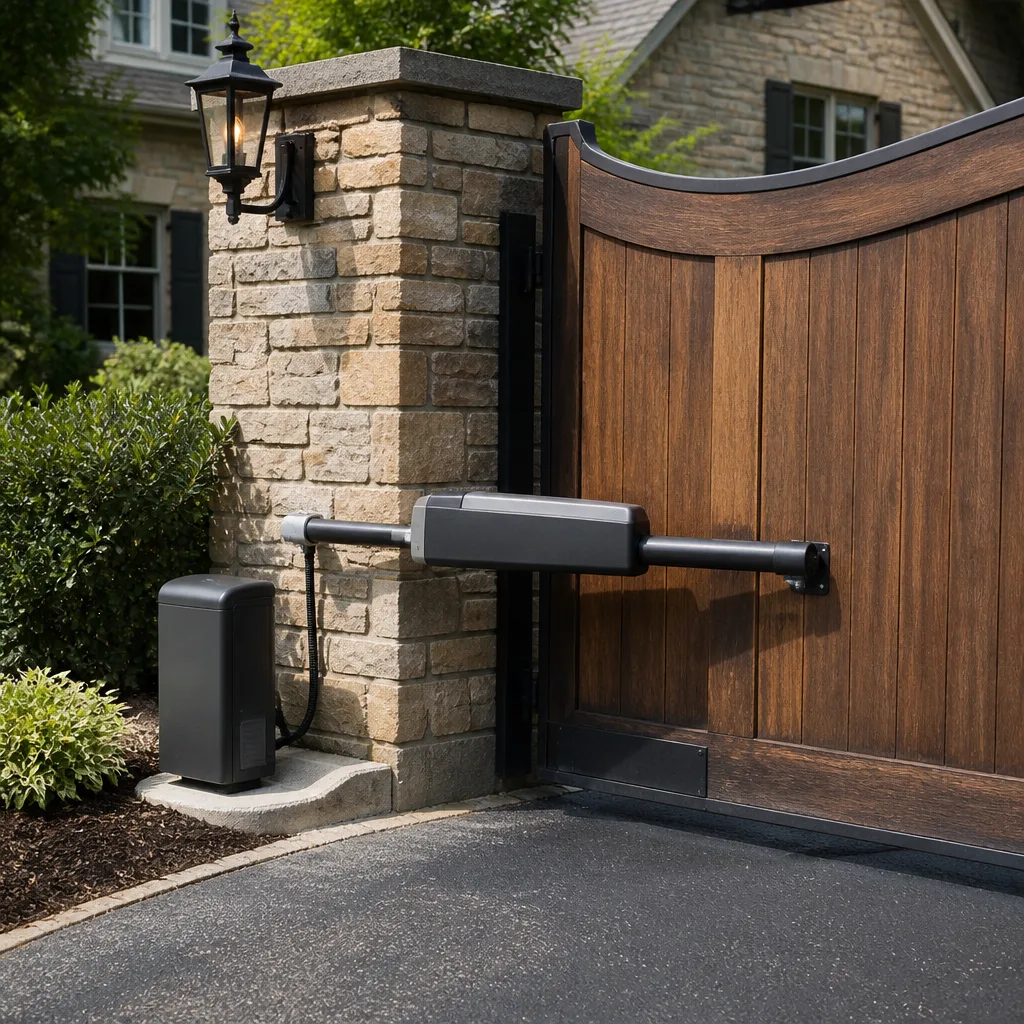 LiftMaster operators
Free on-site gate assessment - hinges, posts, and your LiftMaster or Nice gate operator checked before anything is quoted
The assessment is free and the quote is the invoice.
Get your free estimateSeasonal Gate Repair Care for Avondale: Year-Round Homeowner’s Guide
Most gate maintenance advice you’ll find online was written for a climate with four distinct seasons: a wet spring, a hot summer, a leaf-drop fall, and a freezing winter. Avondale doesn’t work that way. Our year splits into a dry heat ramp, a monsoon stretch, a dusty reset, and a mild winter that’s actually the best working window of the twelve months. Gates here fail on that calendar, not the one in the generic guides, and the tasks that keep them running are timed to match. This guide walks through each of Avondale’s real seasons and gives you the specific checks and adjustments that belong in each one, from tightening frame bolts before the first haboob to knowing which side of your gate will fade first based on which way it faces.
Quick Answer
Seasonal gate care in Avondale means timing your maintenance to the desert calendar: pre-monsoon tightening and sealing in May and June, electrical and drainage checks during the July-to-September storms, a full post-monsoon inspection in October once the dust settles, and hardware adjustments and paint work during the mild November-to-February window, when settings hold and coatings cure properly. Skip those windows and the heat and wind will find the weakest fastener, seal, or ground connection for you.
Styles & brands we work with
- Wrought iron
- Wood & steel frame
- Farm & ranch
- Sliding driveway gates
- LiftMaster operators
Table of Contents
- Why Avondale’s Seasons Break the Standard Maintenance Calendar
- The Pre-Summer Heat Ramp: April 15 to May 31
- Pre-Monsoon Prep: What to Tighten, Seal, and Inspect Before the First Haboob
- Monsoon Season: Electrical Problems That Show Up After Humidity Spikes
- The October Reset: Inspecting Damage the Dust Was Hiding
- The Winter Opportunity Window: Tasks That Can’t Wait Until Spring
- UV Degradation by Compass Orientation: Why South and West Panels Age First
- Your Avondale Gate Care Calendar at a Glance
Why Avondale’s Seasons Break the Standard Maintenance Calendar
The maintenance calendar most homeowners inherit assumes a freeze will stress the metal and a spring thaw will reveal the damage. Avondale never gets that freeze. What it gets instead is sustained heat that expands steel and aluminum daily, wind that arrives loaded with abrasive dust, a monsoon season that dumps water fast after months of none, and a winter mild enough that you can paint and adjust hardware without fighting the weather. Each of those conditions attacks a gate differently, and each one has its own best moment for intervention.
That matters because gate failures in Avondale rarely come from one dramatic event. They accumulate. A frame bolt works itself loose over a summer of daily thermal cycling. A powder coat chalks under UV until moisture finds the bare steel underneath. A ground connection corrodes quietly through a humid July and only shows itself when the operator refuses to start in August. By the time a homeowner notices, the small fix has usually become the larger one.
The four working seasons we plan around look like this:
- Pre-summer heat ramp (mid-April to end of May): the last window before sustained triple-digit heat, when adjustments are easiest and lubricants stay where you put them.
- Pre-monsoon (May into June): tighten, seal, and clear before wind and water arrive together.
- Monsoon (July through September): watch electrical components and drainage, not just the gate itself.
- Post-monsoon reset and winter (October through February): inspect what the storms left behind, then do the work that needs stable temperatures and dry days.
If you’re reading this in the middle of a breakdown rather than planning ahead, that’s a different conversation, and our gate repair page covers the diagnostic side. This guide is about keeping the call from happening in the first place.
The Pre-Summer Heat Ramp: April 15 to May 31
The window between mid-April and the end of May is the single most important maintenance period on an Avondale gate owner’s calendar. It’s the last stretch before sustained 110°F days, and it’s when the work you do actually takes: lubricants stay put, gaps can be measured and corrected at normal metal temperatures, and tightening a bolt means something because the frame isn’t already expanded to its summer size. Wait until June and you’re adjusting a gate in its expanded state, which means the fix may not hold once the heat settles in.
Here’s what belongs in this window:
- Lubricate every moving joint on the operator and hinges. Use a lubricant rated for high temperatures; a light general-purpose oil thins out and migrates once the metal is hot all day. Hit the hinge pins, the actuator pivot points, and the roller or track on any sliding gate.
- Check and set the thermal expansion gap on swing gates. Metal gates grow slightly in heat, and a gate set too tight will bind against its stop or latch in July. Measure the gap at the latch side in the cool morning and confirm the gate can still fully close once things warm up.
- Torque frame and post bolts. A full summer of daily heating and cooling works fasteners loose. Get them snug now rather than discovering the wobble after a wind event.
- Inspect the operator’s control board area for dust buildup. Dust acts as an insulator and traps heat against electronic components. A soft brush and a careful clean before the hot months helps the board run cooler.
- Test the safety sensors and reversing function. Do this when you’re not rushed, so you actually notice if something’s off.
We’ve seen a lot of gates on a lot of properties around Avondale, and the ones that sail through summer are almost always the ones that got this spring attention. The ones that don’t are the ones where a small binding issue turned into a stripped actuator gear in August. Our technicians have up to 12 years of experience, and the pattern is consistent: heat doesn’t create gate problems so much as it accelerates the ones already there.
One more task for this window: if you have any paint or touch-up to do on the frame, get it done before the heat. Coatings cure differently in mild temperatures, and a paint job applied at 105°F can skin over before it bonds.
Pre-Monsoon Prep: What to Tighten, Seal, and Inspect Before the First Haboob
Pre-monsoon prep is really wind prep. The first haboob of the season arrives with fine dust moving at speed, and that dust is abrasive. It gets into every gap, every hinge, every exposed track, and every opening on an operator housing. Loose panels rattle and work their fasteners looser. Seals that were fine in the dry months fail once water shows up behind them. The work you do in late May and early June is what determines how much the first big wind event costs you.
The pre-monsoon checklist
- Walk the full frame and confirm nothing moves that shouldn’t. Push gently on each panel near its corners. Any flex or rattle points to a loose fastener or a fatigued weld.
- Seal the operator housing and control enclosure. Check gaskets and covers. A housing that lets dust in during a haboob also lets water in during the rain that follows.
- Clear the gate’s travel path of debris. Windblown material piles up against stops, tracks, and the base of posts. Clear it now so the operator isn’t fighting an obstruction it can’t see.
- Check the drainage around the gate posts and operator pad. Monsoon rain arrives fast. If water pools where the operator sits or where the posts are anchored, that’s the spot to address before the storms, not after.
- Inspect the ground and wiring connections entering the operator. More on why this matters in the next section, but a visual check now saves a diagnosis later.
- Test the gate through a full open-close-open cycle and watch for hesitation or straining. Any change from how it ran in March is a signal.
The windblown debris issue is the one homeowners most often underestimate. In our experience, a gate that’s been running clean all spring can start straining after the first haboob simply because grit has packed into a track or worked into a hinge and thickened the lubricant you applied in April. The frame takes a beating too; repeated wind loading on a loose panel accelerates fastener wear at every joint. Tightening before the wind is a lot cheaper than repairing after it.
Monsoon Season: Electrical Problems That Show Up After Humidity Spikes
Monsoon season creates a problem most gate owners never anticipate: after months of bone-dry heat, the humidity spikes suddenly, and the electrical side of an automated gate is where that change shows up first. Moisture finds its way into enclosures, connections, and terminations that have been sitting dry since spring. And the component that fails first, almost every time, is the ground connection.
Why the ground? Because a ground connection that’s been quietly oxidizing through the dry months suddenly has moisture to work with, and corrosion accelerates. Once the ground path degrades, the operator starts doing strange things: refusing to start, tripping, or behaving erratically with no obvious mechanical cause. A homeowner sees a dead gate and assumes the motor failed, when the real issue is a corroded ground or a moisture-bridged connection in the control box.
Other electrical issues that surface during monsoon season include:
- Water intrusion in the control enclosure from a gasket that dried and cracked over spring.
- Corroded terminal connections where moisture reached exposed wire.
- Safety sensor and loop detector faults after water reaches the sensor heads or the buried loop wiring.
- Erratic remote or intercom behavior when moisture affects the receiver or wiring.
If your gate goes down during a storm, the mechanical side gets the attention, but the electrical side deserves the diagnosis. This is squarely in the territory of electric gate repair, and it’s worth having someone who works on the whole system look at it rather than guessing at the motor. We handle operators from brands like BFT, Linear, and Viking, and the ground-and-connection failure pattern holds across all of them. If you’re mid-storm with a gate that won’t run, we answer 24/7 and dispatch runs 7am to 7pm. A call outside dispatch hours is booked into the next opening, Sunday through Friday, 7am to 7pm.
One safety note here that matters: water plus electricity at a gate operator is a genuine hazard. If the enclosure is wet or there’s visible damage to wiring, don’t open it up and poke around. Shut off power at the breaker if you can do so safely and get a technician out. A trained professional knows how to isolate and test the system without putting themselves in the path of a live fault.
The October Reset: Inspecting Damage the Dust Was Hiding
By October, the storms are done and the dust settles, and for the first time in months you can actually see what the season did to your gate. This is the inspection that matters most, because it catches the damage that was easy to miss while everything was wet, dusty, or in motion. The single most important thing to check is whether each panel is still true after the high-wind events.
How to check if a panel is still true
You don’t need special tools for this, just a straightedge and a level. Hold the straightedge vertically against the face of a panel and look for a gap between it and the panel surface; a panel that was flat in June will show a slight bow if the wind bent it. Check horizontal too. An out-of-true panel is worth catching now, because a bent panel puts uneven load on the hinges and operator and will wear both faster going forward. Repeat the check on each panel, near the top and near the bottom.
The rest of the October reset checklist:
- Walk the full frame again and re-torque any fastener that moved during the wind season.
- Inspect hinges and the operator actuator for visible wear or scoring.
- Check the post footings for signs of soil movement or loosening after heavy rain saturated the ground around them.
- Look at seals and gaskets on the operator housing for water intrusion that happened during the storms.
- Test the safety reversing function and all sensors so you know the system is protecting itself before the working season.
- Note anything that’s running rougher than it did in spring and get it looked at now, not in the middle of next summer.
Homeowners around Avondale who do this reset consistently find that the winter repair list is short. Those who skip it tend to find the damage in July, when it’s hot and the gate is stuck open. The Avondale dust is relentless, but it’s also patient, and it will keep working on a loose bolt or a cracked gasket until someone stops it.
The Winter Opportunity Window: Tasks That Can’t Wait Until Spring
In most of the country, winter is the season you survive until you can fix things in spring. In Avondale it’s the opposite: the mild months from November into February are the best working window of the year, and the tasks you do now hold their results better than the same tasks done in spring or summer. Hardware adjustments stay put because the metal isn’t cycling through extreme expansion every day. Paint and sealant cure properly because the temperatures are in the range coatings are designed for. The work sets up correctly and stays that way.
Tasks that belong in this window:
- Hardware adjustments: setting latch alignment, hinge tension, and travel limits. Adjustments made in mild weather hold their settings through the following summer much better than adjustments made in the heat.
- Paint and touch-up on the frame and panels: this is the one time of year when coatings cure the way the manufacturer intended, so the finish lasts.
- Sealing: gaskets, weatherstripping on operator enclosures, and any caulking that needs to be redone before next monsoon.
- Replacing worn hinges, rollers, or safety sensors on a comfortable schedule rather than an emergency one.
- Full system service on the operator when there’s no time pressure.
Here’s the part that catches people: some of these tasks genuinely can’t wait until spring in a hot climate. Paint applied in June skins before it bonds. Hardware adjusted in August may not hold because the frame is expanded when you set it. Sealing done right before the heat doesn’t last through the heat. So the winter window isn’t just the comfortable time to work; it’s the only time some of this work is done properly. If you have a worn part or a gate that needs attention on the mechanical side, Gate Repair Avondale handles the repair side of the work and we’re glad to look at it during the mild months when the fix will last.
We also see a lot of homeowners use January and February to think about upgrades or a full replacement. If that’s where you’re headed, our installation team can look at the system during the same mild window, which is a better time to schedule that kind of project than the middle of summer.
UV Degradation by Compass Orientation: Why South and West Panels Age First
Every panel on your gate does not age at the same rate. The sun hits Avondale hard, and it hits different faces of your gate with different intensity depending on which way they point. A panel facing south or west takes the brunt of the afternoon sun and the reflected heat off the ground in front of it. A panel facing north catches far less direct UV. The practical result: south- and west-facing panels need attention roughly 18 months before north-facing ones show the same wear.
That gating factor changes how you inspect and maintain. Instead of treating the gate as a single unit, think of it as a set of faces with different timelines:
- South and west face: the highest UV load. Powder coat and paint here chalk and fade first, and once the coating thins, moisture reaches the steel and rust begins. These faces get inspected and touched up first, every time.
- East face: moderate UV, mostly morning sun. Middle of the pack for wear.
- North face: the lowest UV load. Often looks years younger than the south face on the same gate.
What this means for your seasonal schedule: when you’re doing the winter touch-up work, start on the south and west faces. When you’re doing the pre-monsoon seal check, look at those faces for hairline cracks in the coating first. If your gate is automated, operators mounted on the south or west side of a post or wall are also exposed to more heat and UV, and their enclosures and control boxes take more of a beating than an operator tucked in the shade.
Powder-coated steel and painted steel fail in similar ways but at slightly different rates. Powder coat is tough and resists chalking for a while, but when it does break down it tends to fail at edges and welds first. Paint wears more evenly and shows fading sooner. Either way, the fix is the same: catch the coating breakdown before bare metal is exposed, because once rust starts on a south-facing panel, it moves fast in this climate. If you notice rust blooming on a panel that was fine last season, it’s worth having it looked at rather than waiting for the next maintenance window. Our technicians work on all sorts of gate builds, including systems from Ghost Controls and other common residential operators, and they know which parts of a gate take the most UV in this town.
Your Avondale Gate Care Calendar at a Glance
Here’s the full year on one page, so you can plan around the seasons instead of reacting to them:
- April 15 to May 31 (pre-summer heat ramp): lubricate moving parts with high-temp lubricant, check thermal expansion gaps, torque frame bolts, clean the control board area, test safety sensors, do any paint touch-up.
- Late May into June (pre-monsoon): walk the frame for loose panels, seal the operator housing and control enclosure, clear the travel path, check drainage, visually inspect ground and wiring connections.
- July through September (monsoon): watch for electrical symptoms after humidity spikes, especially grounded or erratic operators. Keep the enclosure sealed and don’t ignore moisture inside it.
- October (post-monsoon reset): check every panel for true with a straightedge, re-torque fasteners, inspect hinges and actuator, check post footings after the rain, look for water intrusion.
- November through February (winter window): hardware adjustments, paint and sealant, worn-part replacement, full operator service, and any installation planning.
If you can’t get to all of it, prioritize in this order: pre-summer lubrication and tightening, pre-monsoon sealing, October panel inspection, then winter adjustment and paint. Those four cover the failures that cost the most when they’re missed.
Common Mistakes to Avoid
- Following a generic four-season calendar. Advice written for a climate with hard freezes and wet springs doesn’t match Avondale’s heat ramp, monsoon, and mild winter. Timing your work to the wrong calendar means you seal too late and paint at the wrong temperature.
- Using the wrong lubricant. A light general-purpose oil thins out and migrates under summer heat, leaving your hinges and pivots dry when they need it most. Use a high-temperature lubricant and reapply on schedule.
- Adjusting a gate at full summer heat. Metal expands, and a gate adjusted when it’s expanded can bind or sit wrong once temperatures drop. Time adjustments for the mild months whenever possible.
- Ignoring the operator’s electrical side during monsoon season. A dead gate after a storm is often a corroded ground or moisture in the control box, not a failed motor. Diagnosing only the mechanical parts can miss the actual cause.
- Painting or sealing at the wrong time of year. Coating applied in summer heat skins before it bonds, and sealant done right before the heat doesn’t last. Wait for the mild winter window for anything that cures.
- Treating the whole gate as a single maintenance unit. South- and west-facing panels wear roughly 18 months ahead of north-facing ones. If you inspect all panels on the same schedule, the sun-facing ones fail first.
- Skipping the October panel check. A panel that got bent during a wind event puts uneven load on hinges and the operator and wears everything faster. Checking it true in October catches it before the next season.
See the difference
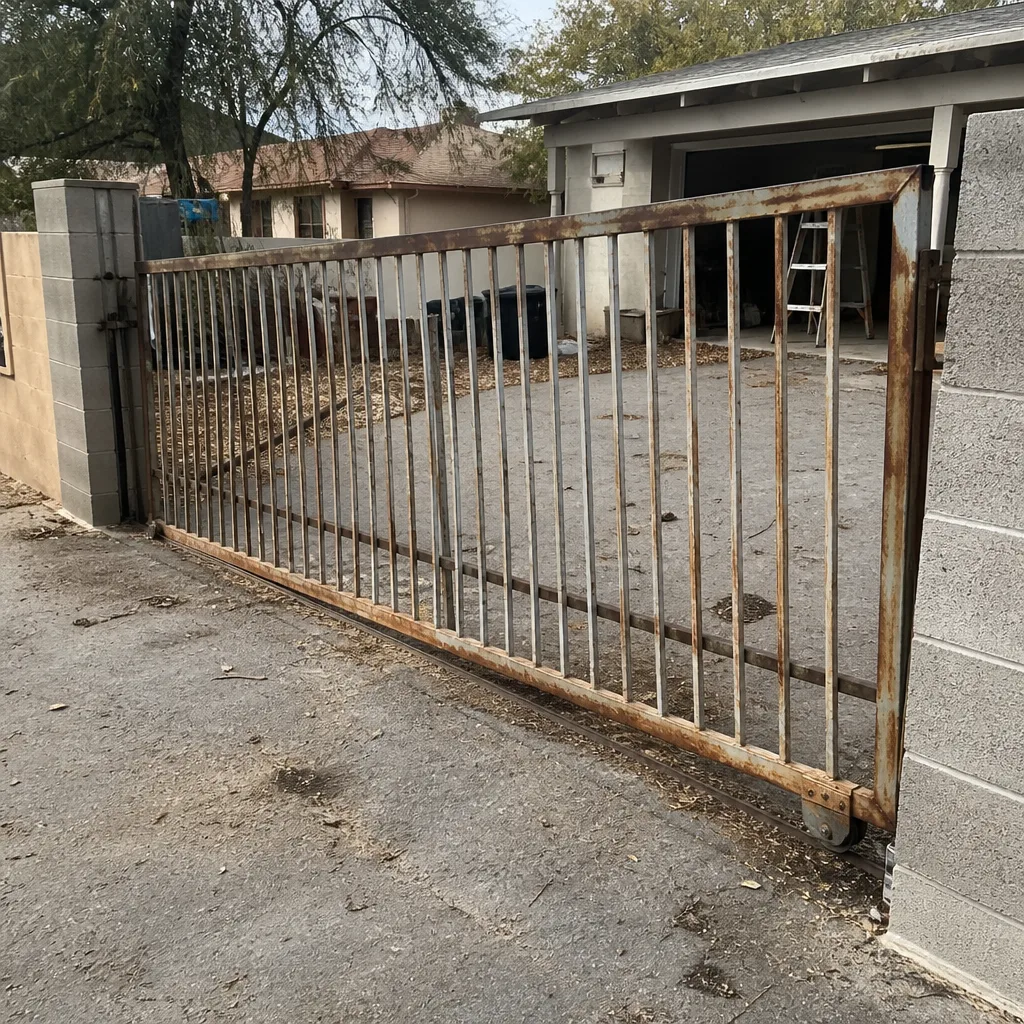 Before
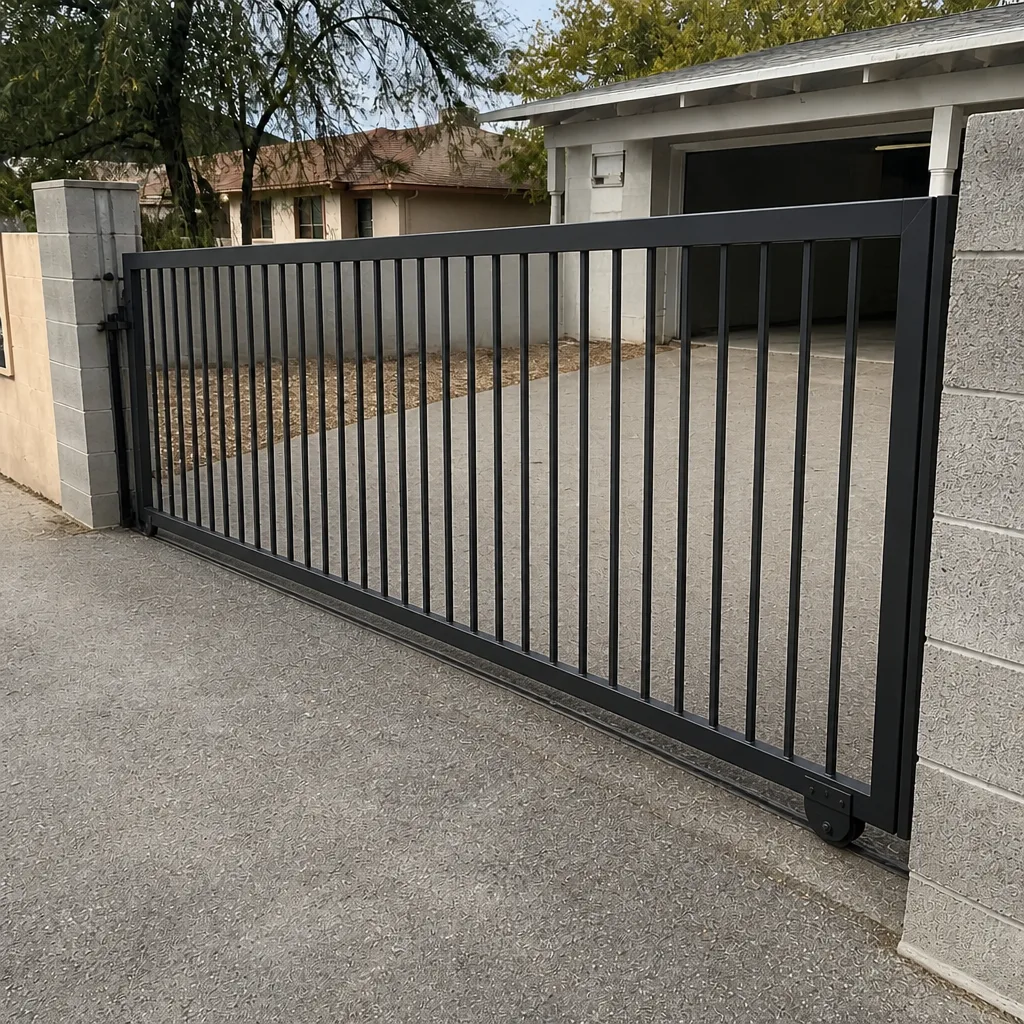 After
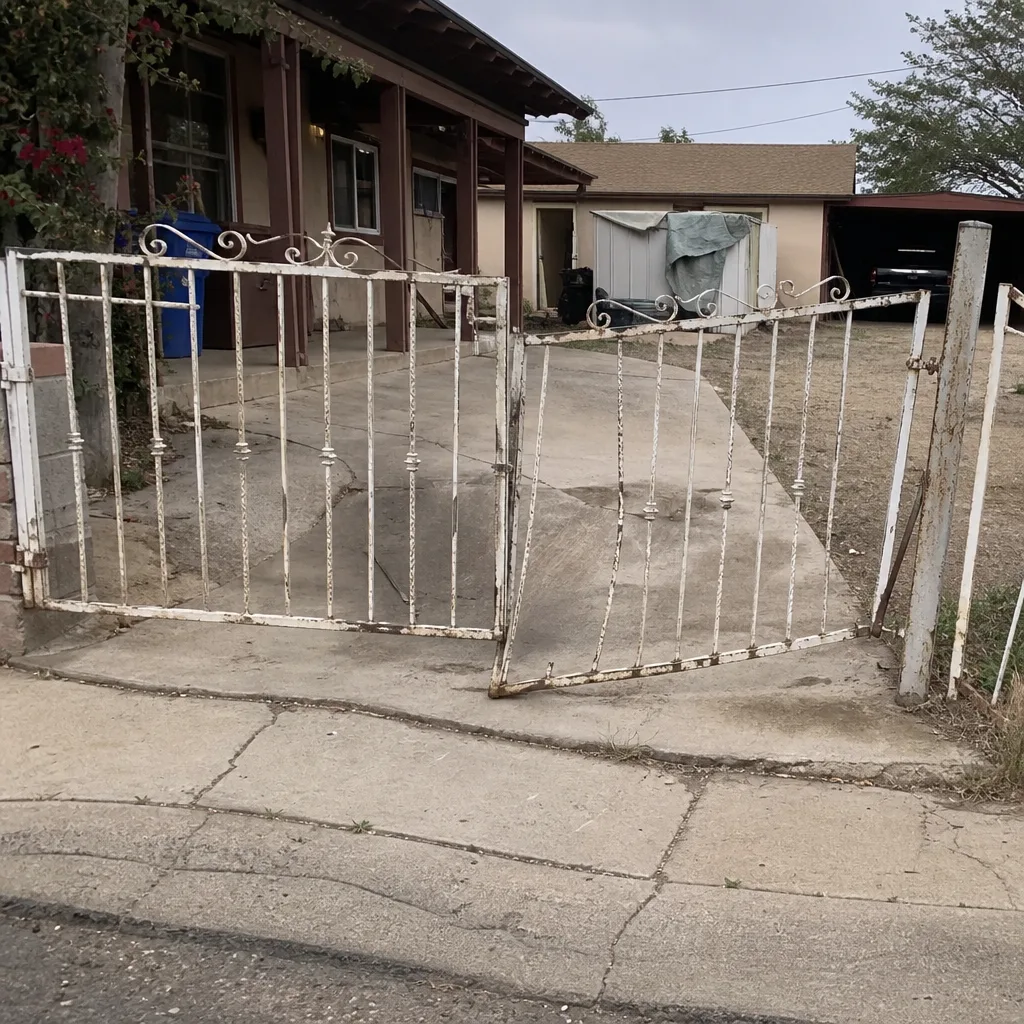 Before
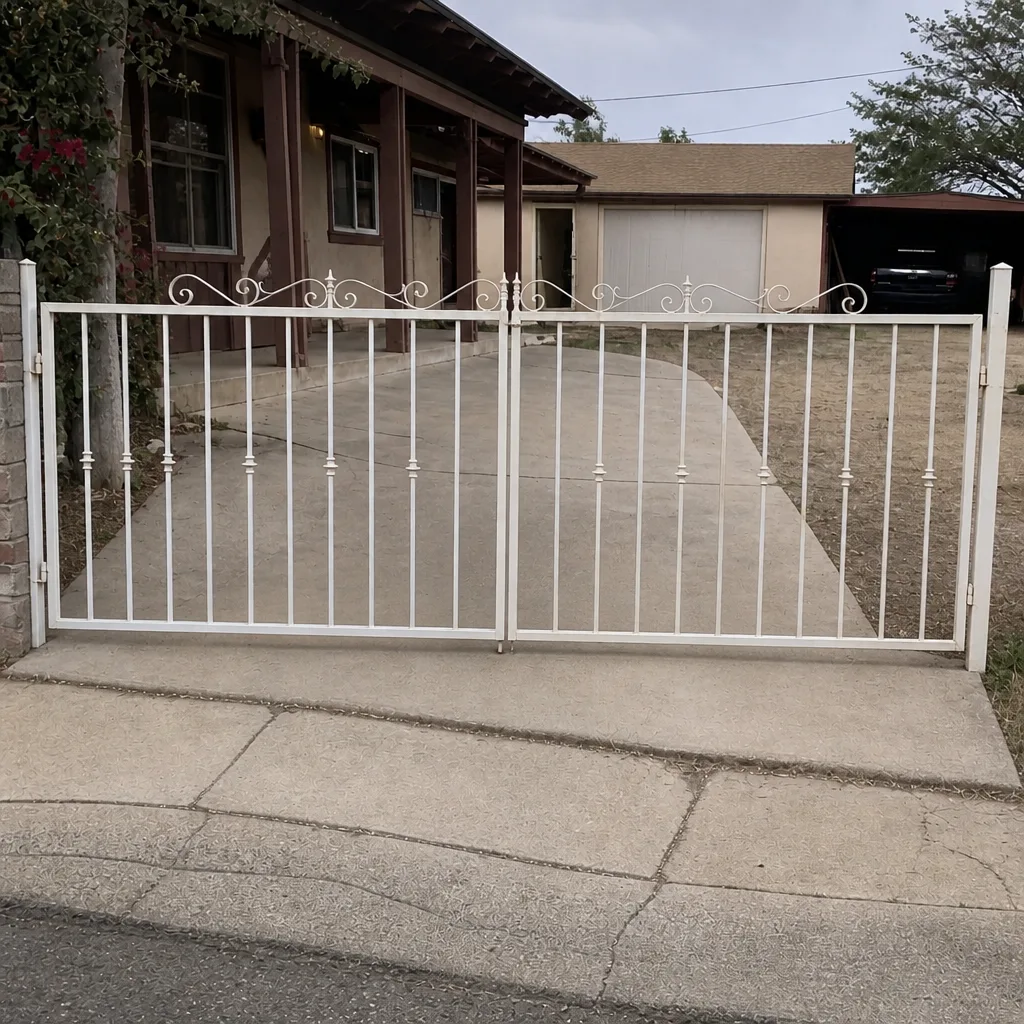 After
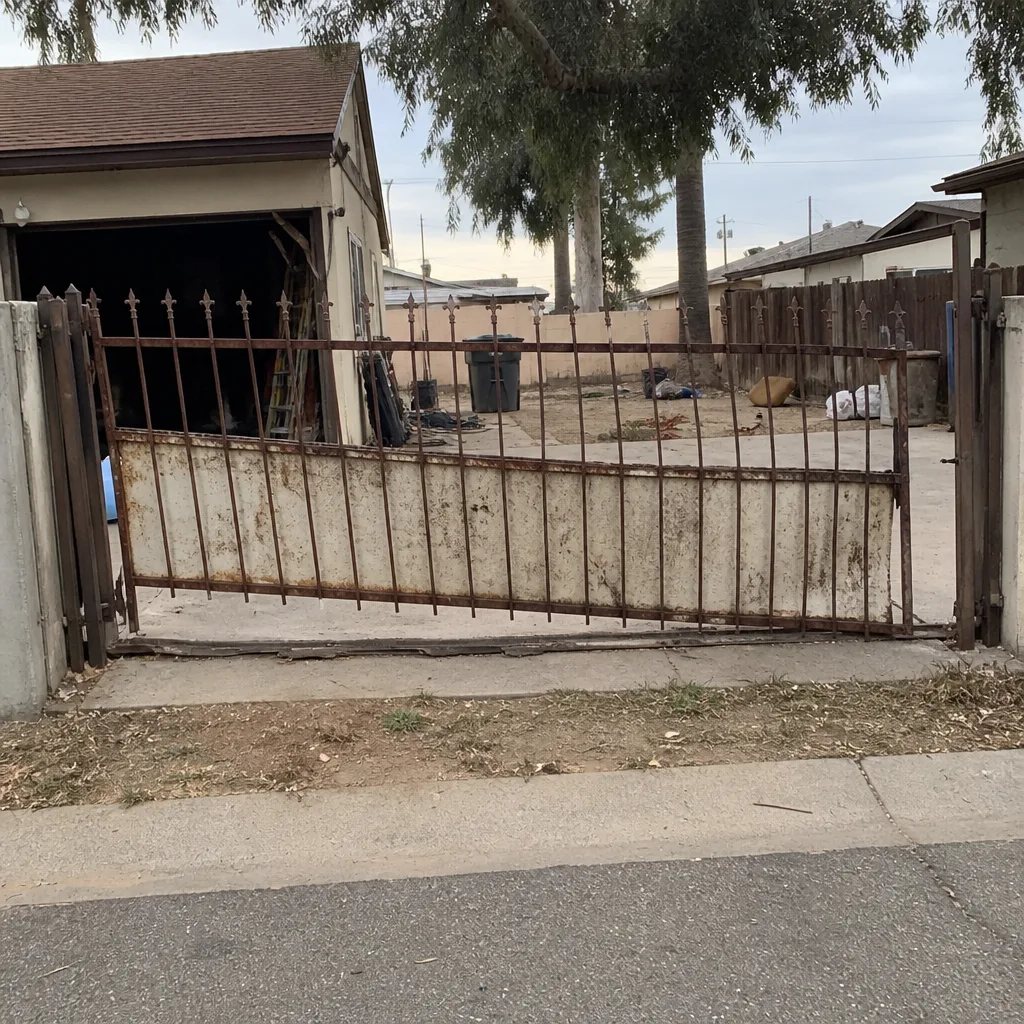 Before
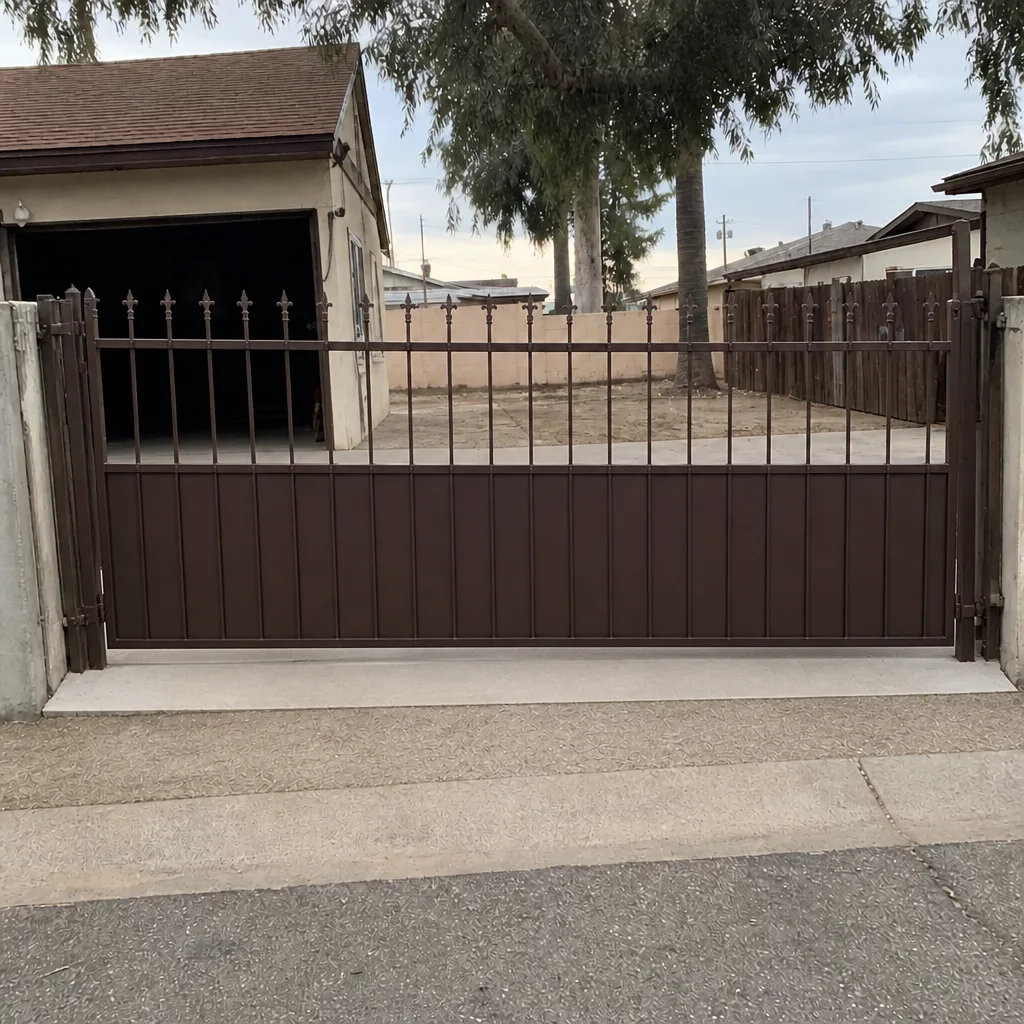 After
When to Call a Professional
Most of the seasonal care in this guide is work a careful homeowner can do. There are specific situations where it’s worth calling instead of continuing on your own. Call when the operator won’t start or runs erratically after a monsoon and you suspect an electrical fault, especially if there’s visible moisture in the enclosure or damage to the wiring. Call when a panel has gone out of true and you need it squared and re-hung properly. Call when a post footing has moved or loosened after heavy rain. And call when a gate that was running clean in spring is straining, binding, or making a noise it didn’t make before, because that’s usually the early sign of a worn part that’s cheaper to fix now than after it fails completely.
Gate Repair Avondale offers free estimates in Avondale. Call (866) 361-9597. We answer 24/7. Fast dispatch from 7am to 7pm, Sunday through Friday.
Frequently Asked Questions
The window between mid-April and the end of May is the most important. It’s the last stretch before sustained 110°F heat, so lubricants stay where you put them, gaps can be measured at normal metal temperatures, and tightening a frame bolt actually holds. Losing that window means fighting expanded metal all summer. Call (866) 361-9597 if you’ve already missed it and want a free estimate on catching up.
Yes, monsoon season puts more stress on the electrical side of your gate than any other part of the year. After months of dry heat, the humidity spike makes ground connections and terminal connections the first things to fail, and water intrusion in the operator enclosure is common. Watch for an operator that refuses to start or behaves erratically, and don’t open a wet enclosure yourself. Call (866) 361-9597 for an electric gate repair estimate if you see those symptoms.
South- and west-facing panels take the direct afternoon sun and reflected heat, which means their powder coat or paint breaks down sooner. That exposure puts them roughly 18 months ahead of north-facing panels on the same gate. Inspect and touch up those sun-facing panels first. Call (866) 361-9597 for a free estimate if you spot rust starting on a sun-facing panel.
It’s not recommended. Coatings are designed to cure in mild temperatures, and paint applied at 105°F or above can skin over before it bonds properly, so the finish doesn’t last. The mild winter window from November to February is when paint and sealant actually cure the way they should. Plan touch-ups for the cool months and call (866) 361-9597 if you need help assessing paint or coating wear in the meantime.
Use a straightedge and a level. Hold the straightedge vertically against the panel face and look for a gap; a panel that was flat will show a slight bow if it’s been bent. Check horizontally the same way, and do it on each panel near the top and near the bottom. An out-of-true panel puts uneven load on hinges and the operator. Call (866) 361-9597 if you find one that needs work.
The operator should be visually inspected and tested at each seasonal transition, and full service scheduled in the mild winter months. The critical checks are the ground connection, gaskets and seals on the enclosure, and the safety sensors and reversing function. We work on operators from brands like BFT, Linear, and Viking. Call (866) 361-9597 for a free estimate on a full system check.
The Bottom Line
Avondale’s gate care calendar is built around the real seasons here, not a generic four-season template: a critical pre-summer heat ramp in mid-April to May, pre-monsoon tightening and sealing in late May into June, an electrical watch through the monsoon months, a full panel-true inspection in October, and the mild winter window when hardware adjustments and paint actually cure and hold. Prioritize the pre-summer work, seal before the first haboob, respect the electrical side of the operator after humidity spikes, and remember that south- and west-facing panels wear roughly 18 months ahead of the rest. Do those and the seasonal work becomes routine. Skip them and the heat and wind will find the weak point for you.
Call (866) 361-9597 for a free estimate. We answer 24/7. Fast dispatch from 7am to 7pm, Sunday through Friday.
Written by the team at Gate Repair Avondale.